
 OffroadAdmin
Bottom Line
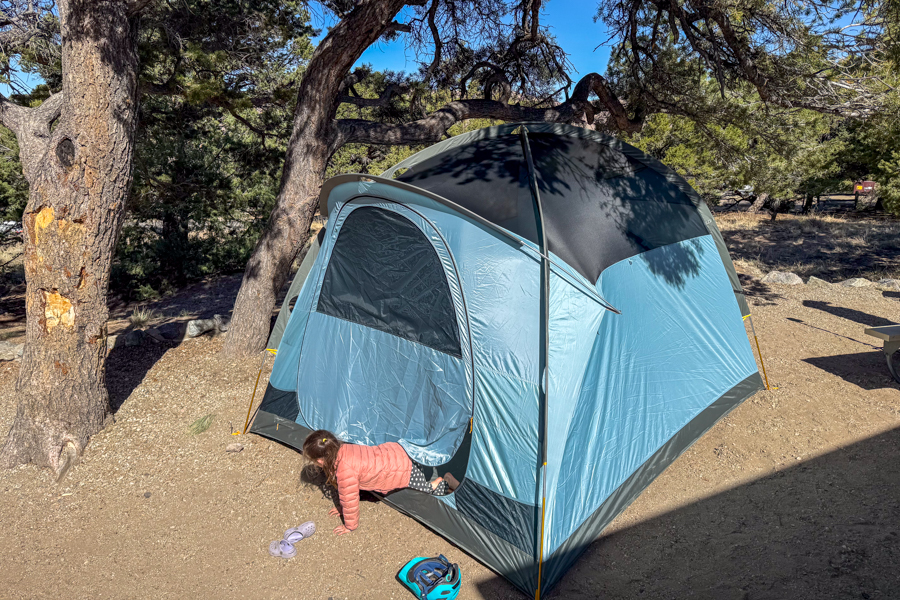
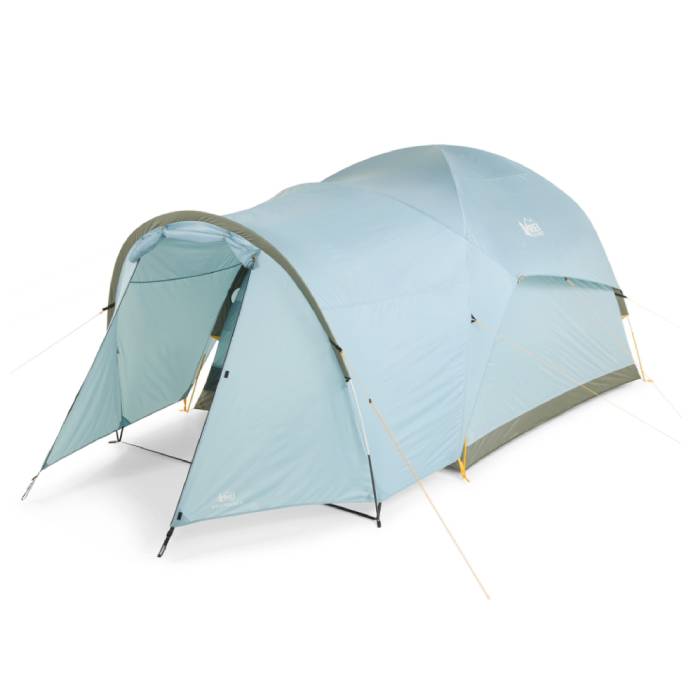
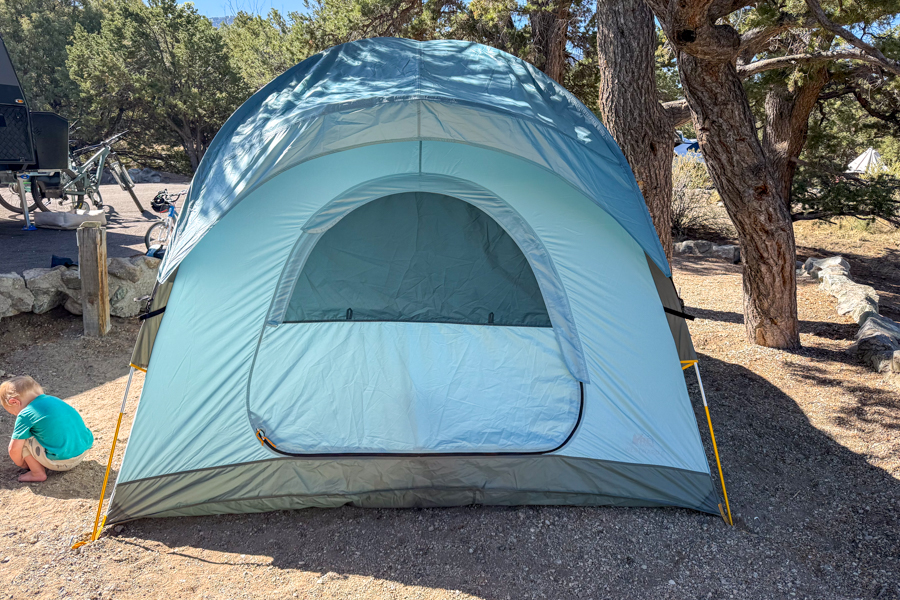
The REI Westward 6 is a roomy family camping tent with solid materials, a tall interior, and one of the most useful vestibules we’ve tested. At 77 inches at its peak, it has enough headroom for most adults to stand up comfortably. This makes a big difference when you’re changing clothes, wrangling kids, or just trying to exist inside without feeling cramped The 35.1-square-foot vestibule is the other big draw. It’s large enough for a couple camp chairs, muddy shoes, bins, or the usual pile of kid gear that somehow multiplies by bedtime.
There are some thoughtful details here, too. The brow pole opens up the main door nicely, both doors have zippered windows for extra airflow, and the color coding makes setup considerably less complicated than it appears at first glance.
The biggest thing to note is the partial fly. In warm, dry weather, it works really well and gives this tent excellent airflow. But that same design is less ideal in extended rain or colder temps, where the more open build can feel drafty and a little less protected. We also wish the guylines were pre-attached and came with stakes, especially on a tent this tall.
Still, for families camping mostly in mild to moderate three-season conditions, the Westward 6 is a comfortable, well-made tent with impressive livability. For more options, check out our full guide to the best camping tents.
How We Tested
We tested the REI Westward 6 over multiple nights in a pretty wide range of Colorado conditions. These included windy camps at Great Sand Dunes National Park, early-spring weather in the foothills, and warm summer nights at a campground. We pitched and packed it up over and over, used it with and without the rainfly in direct sun and cooler evening temps, and set up the full vestibule at multiple camps. We also made a point to pitch it both solo and with a partner.
Quick Specs
REI Westward 6
Best Luxury Camping Tent
CleverHiker Rating:
4.6/5.0
Price:
$549
The size we tested feels:
Luxurious for 2, comfortable for 3-4, and manageable for 5-6
Weight:
19 lb. 10 oz.
Dimensions (LxWxH):
120 x 97 x 77 in.
Pros
- Big front vestibule
- Large doors for easy access
- Enclosed pole sleeves for added wind resistance
- Vents well
- Color-coded for easy setup
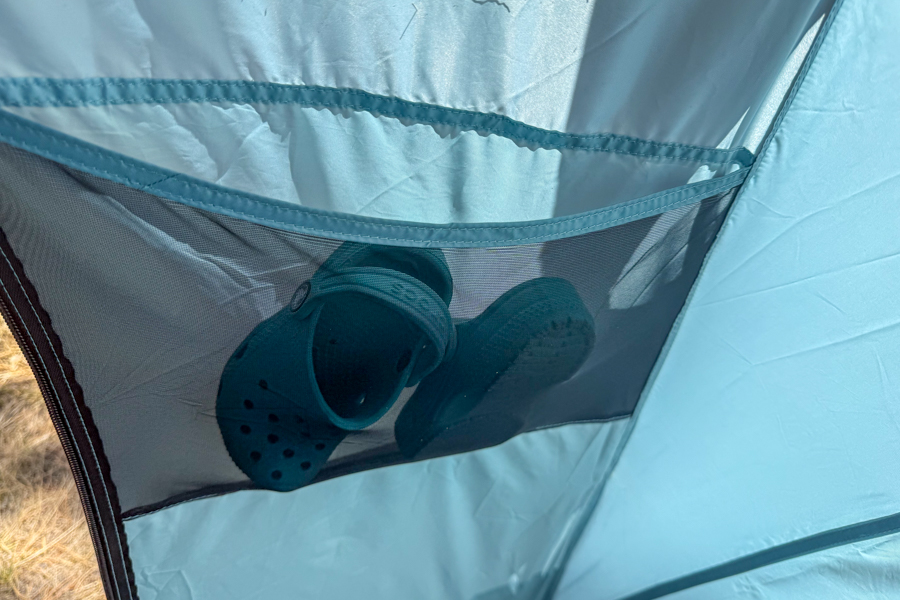
- Handy external storage pockets
Cons
- Partial fly offers less protection in extended rain
- Solo pitching the fly can be challenging due to the height
- Sloppy carry bag
Comfort
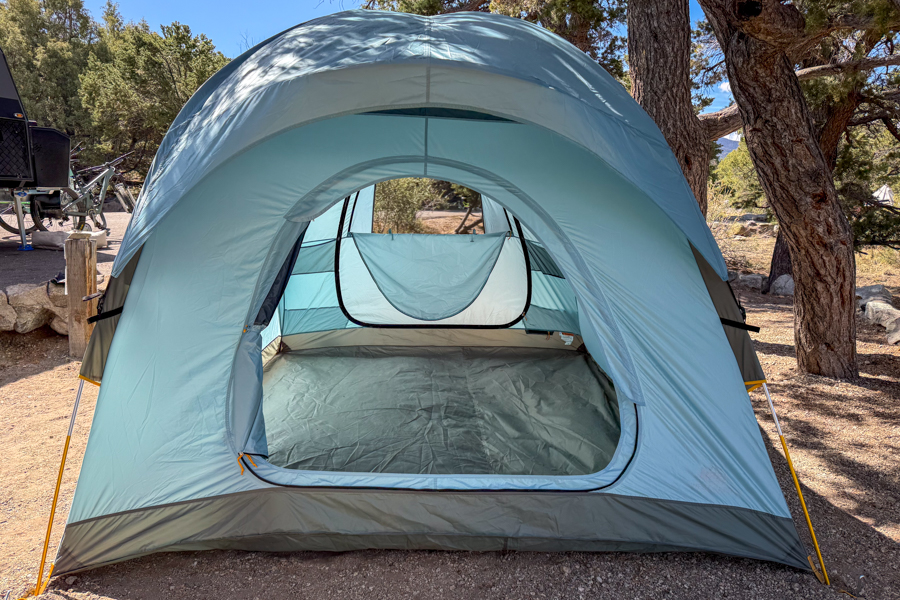
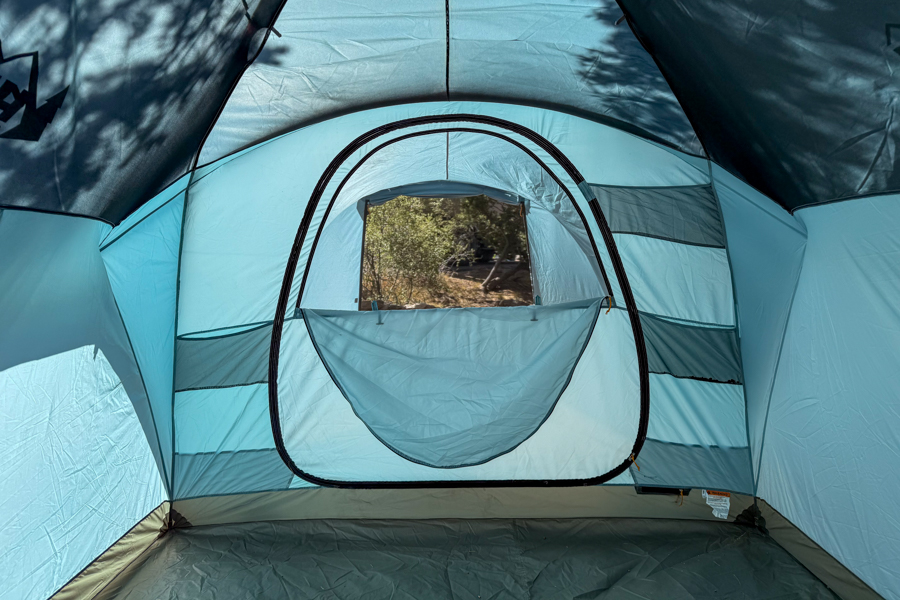
Tall campers are going to appreciate the Westward 6 right away. With a 77-inch peak height, it allows you to stand up, change clothes, and move around without constantly hunching over. At 6 feet 2 inches, even our taller analyst still had plenty of headroom in the center.
The brow pole helps a lot. Instead of the ceiling dropping off sharply near the door like it does on a lot of dome-style tents, it keeps that front section feeling taller and more open. For a family of four to six, there is plenty of room to spread out. For two people, it feels downright luxurious.
Ventilation is one of the better parts of this design. The partial fly and mesh-heavy canopy let a lot of air move through, which we noticed right away on warmer days. Even in direct Colorado sunshine, if there was a breeze, the tent stayed decently comfortable. The trade-off is that it does not hold warmth especially well once temperatures drop, so this is not the coziest setup for colder, shoulder-season nights.
Durability
The REI Westward 6 feels well built in a way that’s pretty obvious as soon as you start handling it. The fabrics have a sturdier, more confidence-inspiring feel than a lot of the family camping tents we’ve tested. The hardware, webbing, and pole structure feel like they were made with regular use in mind, not just occasional weekend trips. This is not a tent that feels flimsy or overpriced for its quality. .
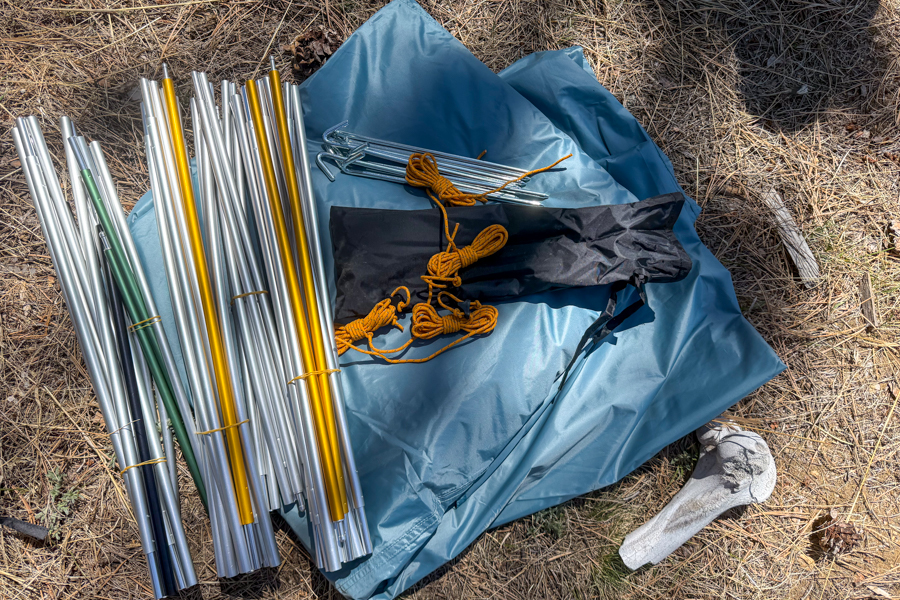
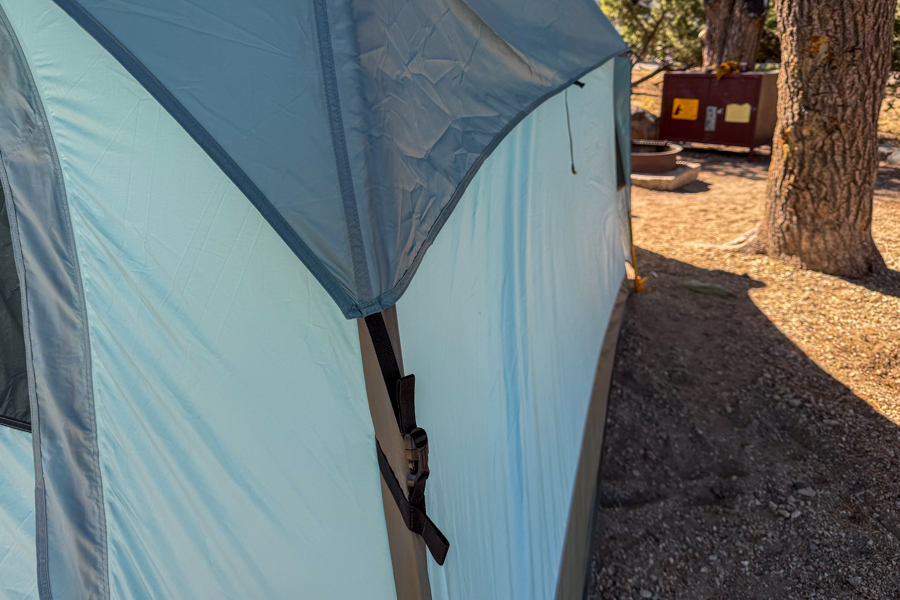
The poles are aluminum, which we appreciate on a tent this size, and they feel solid once everything is tensioned. Despite its taller profile, the structure felt stable as long as we took the time to pitch it well. At Great Sand Dunes National Park, where wind is rarely subtle, we were reminded quickly that a tent this tall needs to be guyed out properly. Once we did that, it felt much more secure, but it was frustrating that the guylines were not pre-attached and did not come with their own stakes.
The partial fly is probably the biggest long-term durability question mark. This is not because it feels poorly made, but because it leaves more of the tent body exposed than a full-coverage fly would. In nice weather, the design works great. In rougher conditions over time, it may mean a little more wear and exposure than some other tents in the category.
That said, overall build quality here is strong. The materials, pole set, and stitching all inspired more confidence than a lot of similarly sized family tents. The Westward 6 feels like a shelter built for families who camp regularly, not just once or twice a year.
Weather Resistance
This tent handles mild to moderate weather well, but it’s important to understand its intentions before you head into rougher conditions. In early-spring rain in the foothills, the tent kept us dry, and its overall build quality gave us pretty good confidence. The materials felt solid, the tub floor did its job, and nothing about the tent felt flimsy when the weather turned.
Where things get a little more nuanced is the fly design. The partial fly is a big reason the Westward vents so well, but it also means you are giving up some protection compared to a full-coverage design. In light rain and variable weather, that trade-off feels totally reasonable. In longer storms, colder temps, or especially exposed camps, it becomes more noticeable. This is not the tent we would choose for trips where rough weather is likely.
Wind is another consideration. The Westward 6 is tall, and tall tents always give wind more to push against. We felt that on early-spring camping trips, when strong gusts quickly reminded us this tent needs to be fully guyed out to perform its best. Once properly tensioned, it was much more stable.
Overall, weather resistance is good enough for the kind of camping this tent is built for: mild to moderate three-season use. It keeps weather out well enough, but the partial fly and tall profile make it less confidence-inspiring in windy, exposed campsites and during prolonged storms.
Ease of Setup
The Westward 6 is not the fastest tent to set up, but it is more manageable than it looks at first. There are a good number of poles involved, especially if you’re setting up the fly/vestibule, but REI did a nice job with the color coding. The poles, sleeves, and webbing are all clearly matched, which cuts down on guesswork and makes the whole process feel less chaotic than it could.
The tent body is pretty straightforward once you’ve done it once. The pole structure is familiar, and the clips and sleeves all make sense. That said, this is still a big tent, and big tents just take more time and more walking around. Solo pitching is doable, but it is not particularly fun, especially if there’s any wind involved. With two people, it feels more reasonable and goes up without much drama.
The vestibule is where setup gets more involved. It adds a ton of usable space, but it does require a couple more poles and a few extra steps. The good news is that REI made that process pretty intuitive. Even though it looks like a lot spread out on the ground, it comes together better than expected.
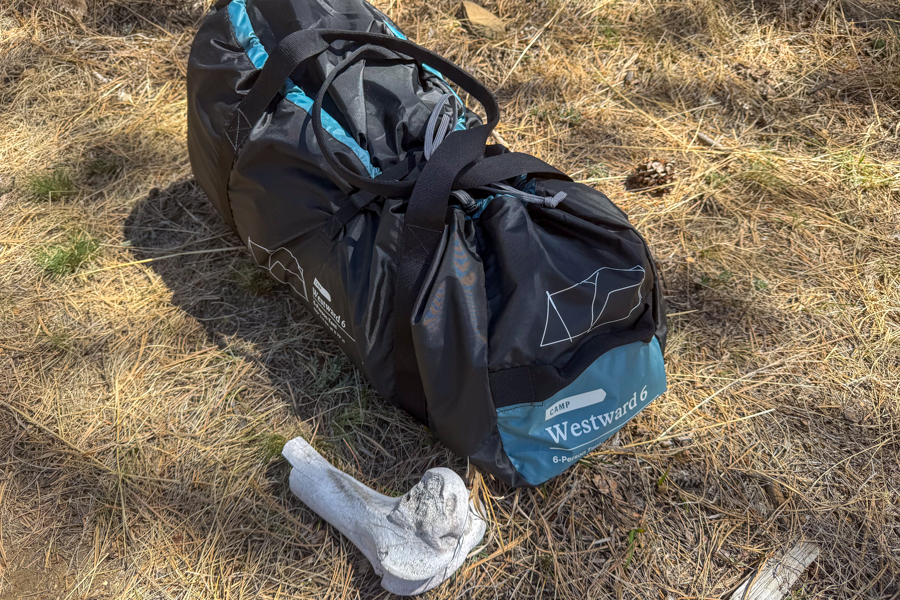
Packing it back up is mostly painless. The carry bag opens wide, which always makes life easier when you’re breaking camp. The only downside is that the cinch closure doesn’t snug things down especially neatly, so the bag can feel a little sloppy once everything’s packed away.
Features
For a family-style tent, the Westward is well featured. The highlight is the vestibule. With 35.1 square feet of covered outdoor space, it’s large enough for two camp chairs and substantial gear storage. We even found ourselves stashing our bikes in it overnight. The pole-supported design means it holds its shape and provides real coverage. You can even use the front flap of the vestibule as an awning – as long as you have a couple trekking poles handy.
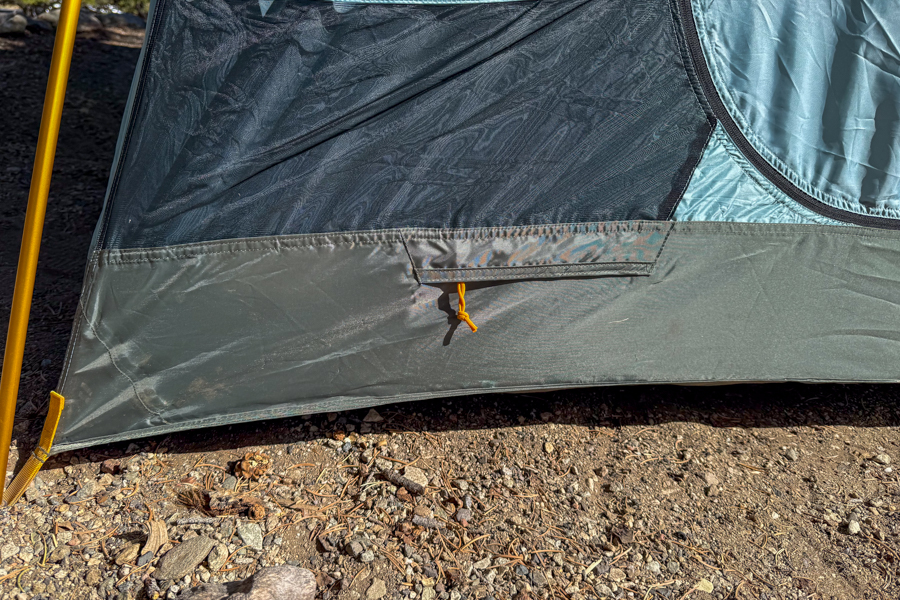
Both doors include half-moon zippered windows, which allow for ventilation and visibility with the main door closed. The awning configuration on the front door creates a covered entry option in light rain without closing the space entirely. The external pocket outside the main door is a small but practical storage addition. The E-port for threading an extension cord into the tent is a useful campground feature. A lantern loop at the peak provides a central lighting attachment point.
The color-coded pole, sleeve, and webbing system pays off during setup. On a tent with this many components, removing ambiguity is worth more than it might seem on paper. The partial-fly design also functions as a feature for warm-weather campers. The ventilation it enables is better than most similarly sized but fully enclosed tents we’ve tested.
One downside is that the guylines are included but not pre-attached, and no stakes come with them. For a tent this tall, guying out is not optional in wind, and the kit as delivered leaves that job incomplete. Budget for additional stakes and handle the guyline attachments before your first trip.
Should You Buy the REI Westward 6?
The Westward 6 is a great choice for families that camp regularly in three-season conditions. It’s a spacious, well-built shelter with excellent ventilation, a large vestibule, and enough peak height to actually stand up in. The materials are noticeably better than most tents at this price, the color-coded setup system is legitimately helpful, and the partial-fly design makes warm-weather camping more comfortable than a fully enclosed alternative.
There are some caveats, though. If you camp in reliably rainy or cold conditions, the partial-fly design and poor heat retention may be dealbreakers. And for exposed or windy sites, plan to purchase additional stakes and attach the guylines before your first trip. But for mild to moderate three-season car camping with a family, the Westward 6 is one of the better options available.
What Other Camping Tents Should You Consider?
If you’re considering the REI Westward 6, here are a few other worthy options from our guide to the best camping tents:
The North Face Wawona 6 Review: If the Westward 6’s vestibule impressed you, the Wawona 6 takes that concept even farther. In fact, the front vestibule is so large it functions as an outdoor room. It still uses a partial fly, but the materials are top-tier, making it one of our favorite camping tents. There is a small jump in price, but there’s also a step up in build quality and features.
REI Base Camp 6 Review: For another high-quality REI option, their Base Camp 6 is an organizational standout. It has 14 interior mesh pockets, along with a gear loft and dual vestibules. It’s also more wind-worthy than the Westward, although setup is fairly involved.
Kelty Wireless 6 Review: For comparable interior space at a lower price , the Wireless 6 is the most direct alternative. Build quality is a step down from the Westward 6 – including fiberglass poles instead of aluminum – and ventilation is not as strong. But the floor area is substantial, and the value is hard to beat.
The post REI Westward 6 Tent Review appeared first on CleverHiker.