
 OffroadAdmin
Bottom Line
Some say the best sleep you can get outside is in a hammock – and for the best of the best, we turn to the Warbonnet Ridgerunner. The Ridgerunner proved itself as the most comfortable hammock we’ve tested. It also stood out as high-quality and easy to use. We thoroughly enjoyed using the Ridgerunner throughout a beautiful Minnesota spring.
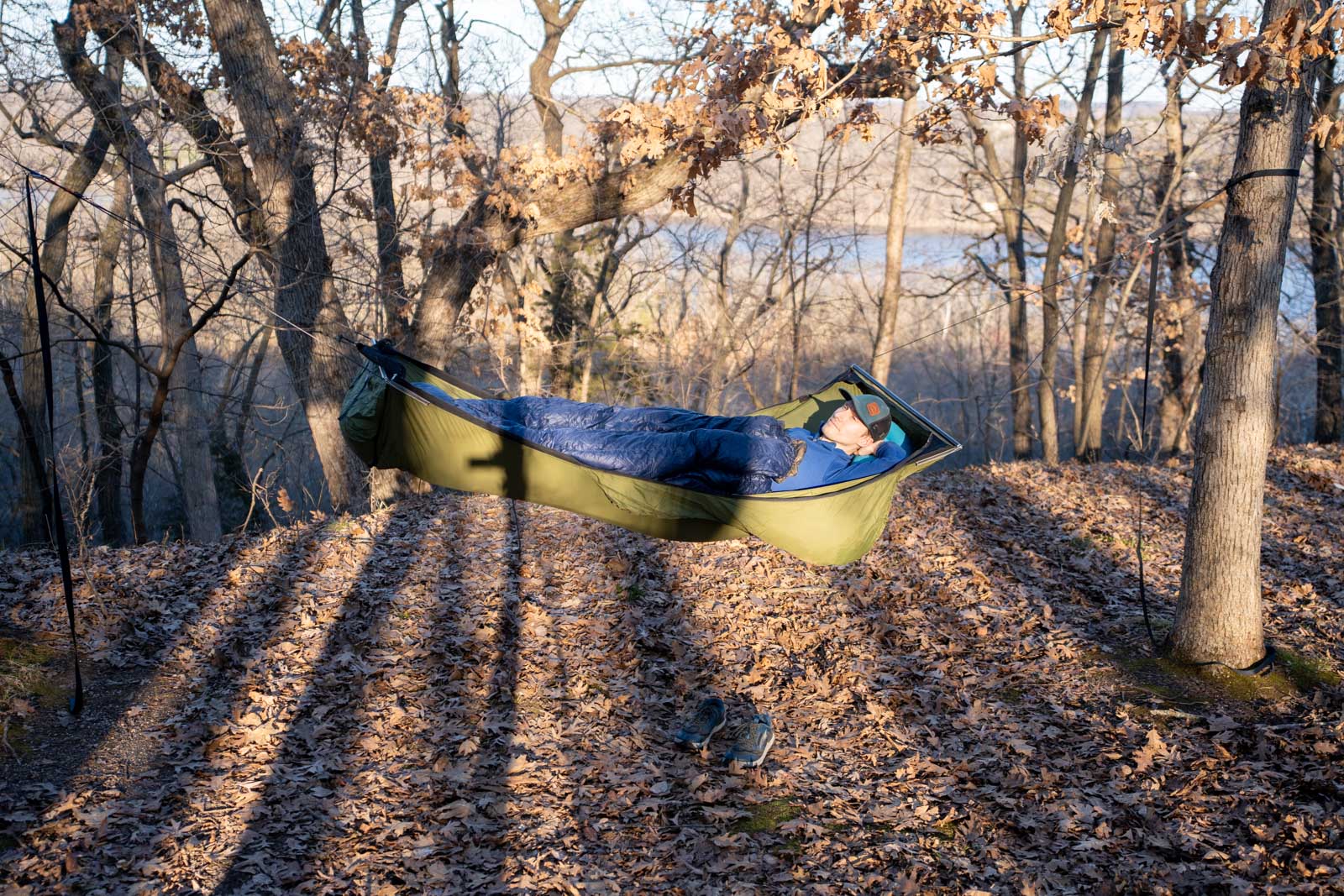
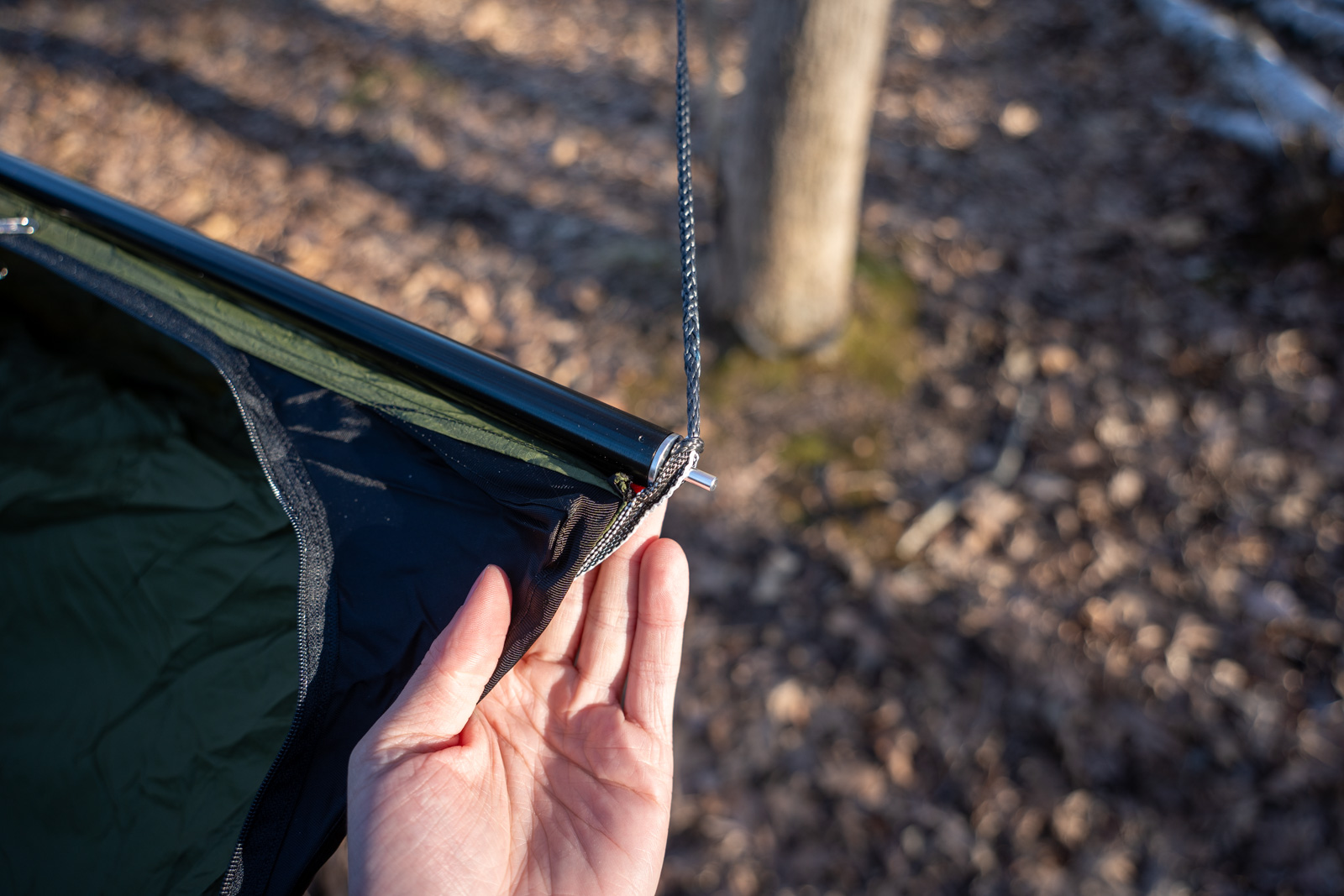
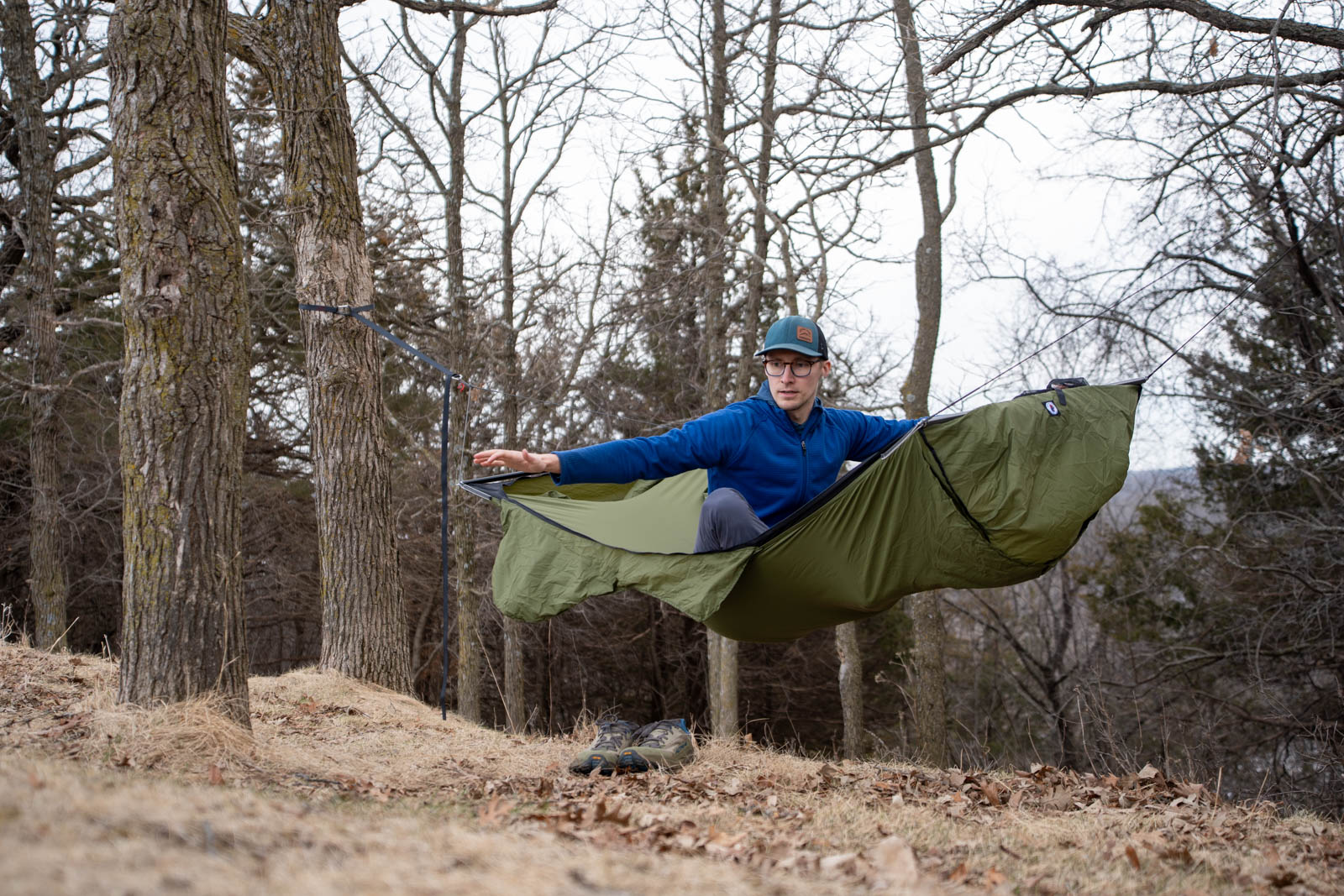
The Ridgerunner is a bridge hammock, featuring aluminum spreader bars at the head and foot ends. This creates a “bridge” that keeps the fabric separated rather than gathered at the end like traditional hammocks. The result is a much flatter and more natural body position that makes it easy to get a great night’s sleep.
However, the Ridgerunner is heavier than most alternatives due to the extra components. Additionally, the higher center of gravity makes it a bit tippy if strung too tightly, and it comes at a bit of a premium price-wise. Still, frequent users and those who prioritize comfort above all else will find a lot to like.
For a wider look at the market, check out our best camping hammocks gear guide.
How We Tested
We tested the Warbonnet Ridgerunner throughout a spring in the Midwest. We brought it deep into the Boundary Waters of Minnesota and braved the spring thaw at nearby state parks to gauge its all-around performance. We familiarized ourselves with every feature, stuffed it into and removed it from our pack countless times, and slept in it several nights.
Quick Specs
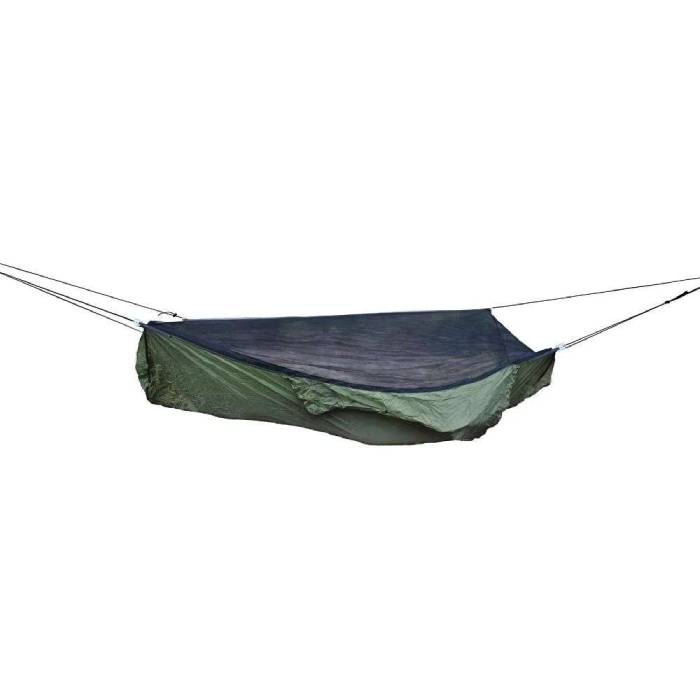
Warbonnet Ridgerunner
Most Comfortable Hammock
CleverHiker Rating:
4.4/5.0
Price:
$220 (double-layer fabric with bug net)
Measured Weight:
2 lb. 9.3 oz.(hammock, attached guylines, spreader bars)
Weight Limit:
250 lb. (double-layer fabric)
Dimensions:
10.1 ft x 3.7 ft
Pros
- The most comfortable hammock we tested
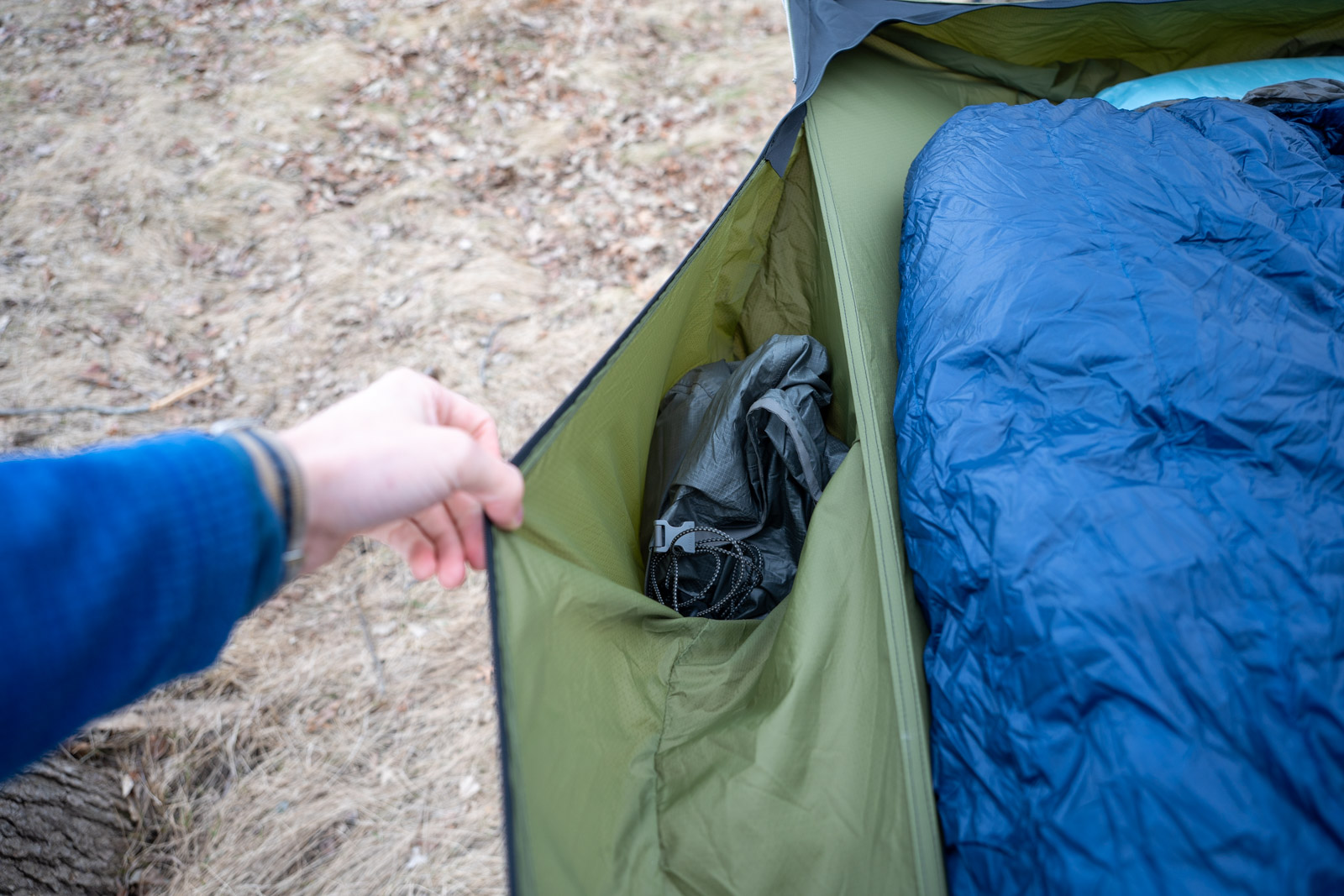
- Handy double side pockets
- Stashable bug net
- Excellent quality and feel
- Can be ordered with a double layer for a sleeping pad
Cons
- Fairly heavy
- Tippy if hung too tight
- Spreader bars are bulky
Comfort
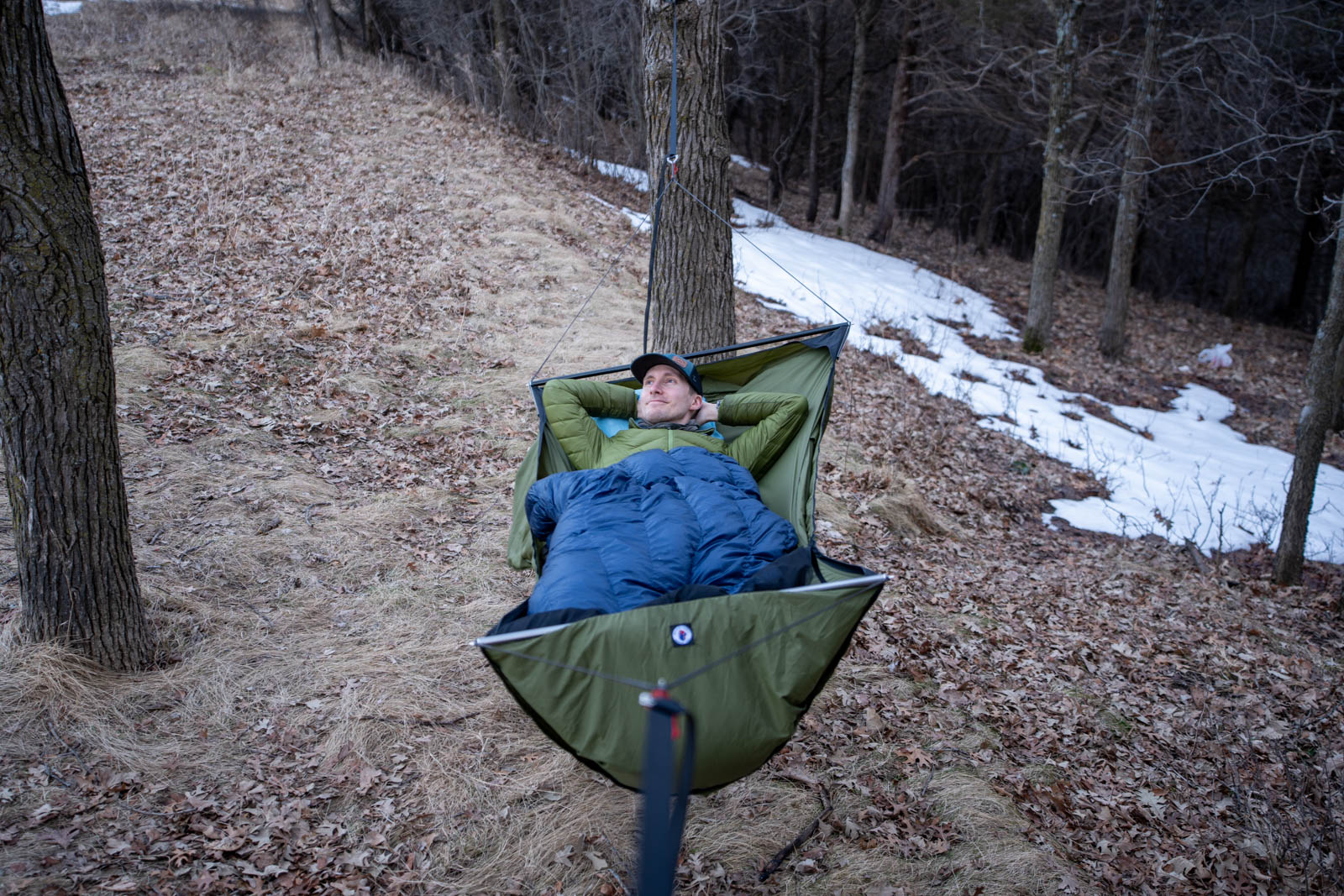
Bridge hammocks top the comfort chart, and the Ridgerunner delivers in spades. It has all the benefits of sleeping on a suspended fabric, along with the support to keep the structure flat.
Testing the Ridgerunner during the early-spring thaw at Minnesota state parks, we were struck by its all-around comfort. It doesn’t sleep like other hammocks – it’s in a different category entirely. In gathered-end hammocks, lying flat is achieved by sleeping diagonally, with the fabric hugging your shoulders. With a bridge hammock, the fabric is pulled to the side by rigid spreader bars at the head and foot end.
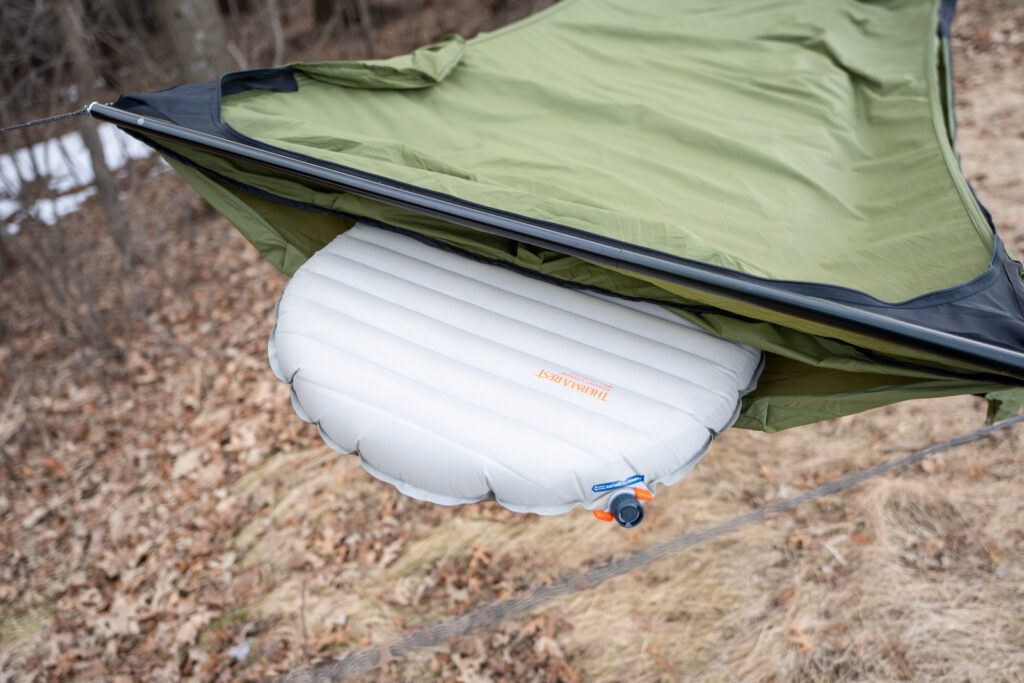
The Ridgerunner includes another premium feature that adds to comfort: a second layer. This acts as a sleeve for a sleeping pad, keeping it in place throughout the night. It worked really well for us, lending even more flatness and support.
Features
Hammocks are usually a bit light on features by design, but the Ridgerunner includes some excellent extras. For starters, there are two generous pockets on either side – great for stashing headlamps, phones, or spare clothes. The integrated bug net is also well executed, providing a generous amount of space without excess fabric, and the dark mesh makes for top-notch stargazing. Testing the hammock on a forested river bluff, we had one of those “nature is incredible” moments when we first laid back with a nearly unobstructed view of the night sky.
If you’re sleeping in a place without bugs (lucky you), the mesh rolls back and tucks neatly into its own pocket, which is a lovely design touch. The option to have it built with a pad sleeve – as we opted to do – is another great feature. Most hammocks rely on underquilts for warmth, but being able to use a standard sleeping pad lowers the barrier to entry for those new to hammocking.
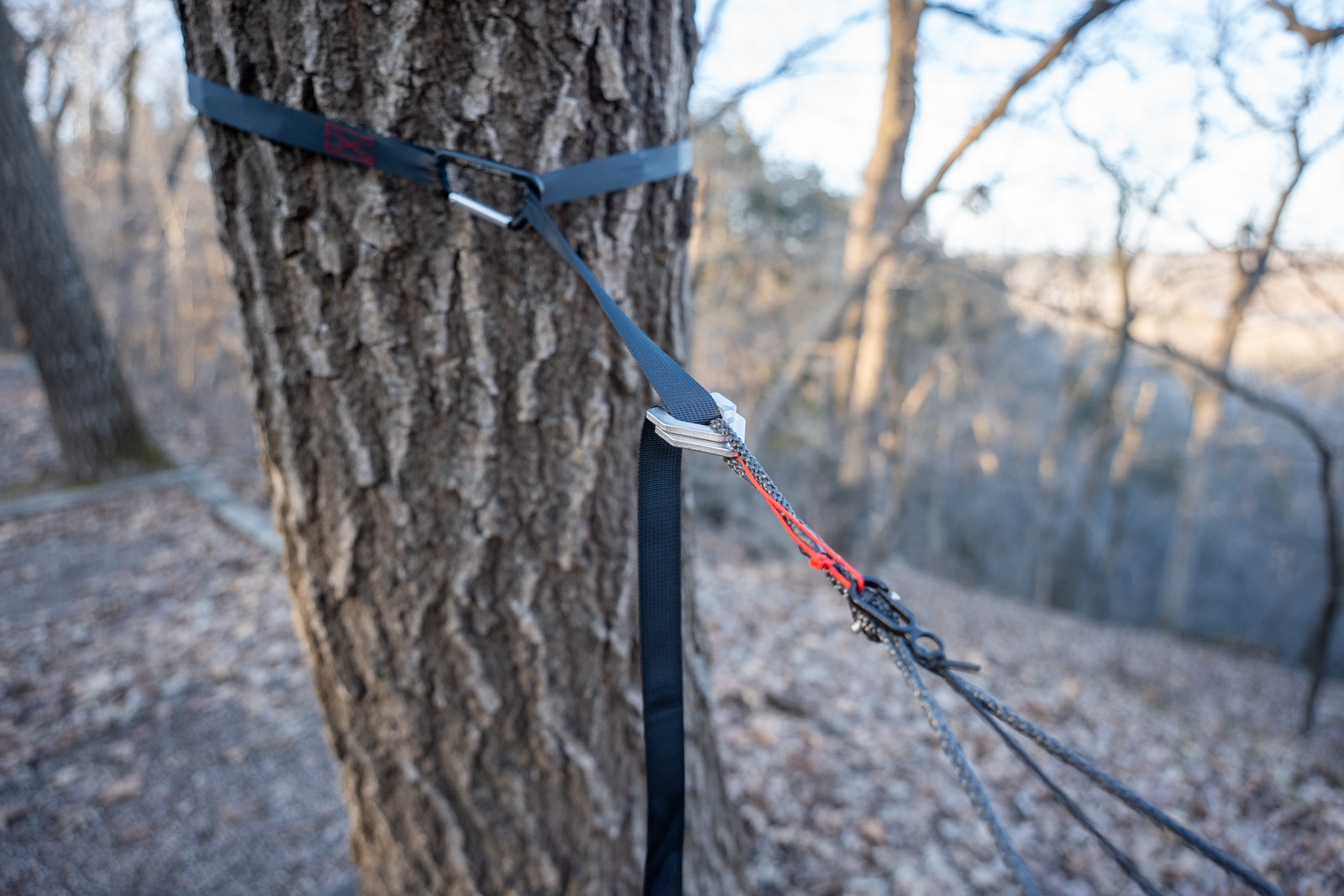
Warbonnet offers a few suspension options – or none if you want to use your own. We opted for the polyester webbing with buckles and carabiners, which is what we recommend for most users. This system worked well, although you can shave weight by going with a more streamlined alternative.
Weight
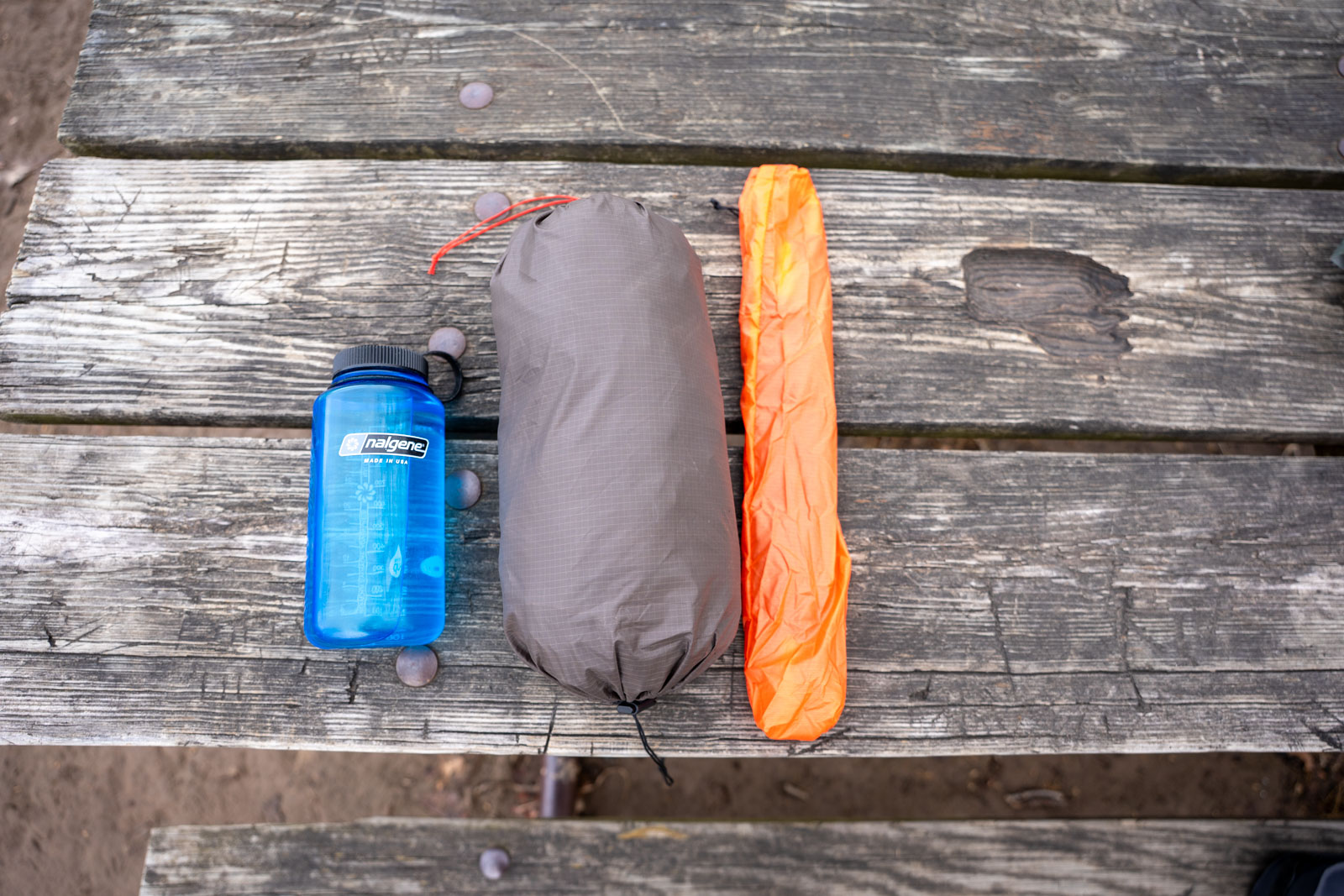
At 2 pounds, 9.3 ounces for the hammock and spreader bar set, plus another 8.5 ounces for the suspension, this is not a particularly lightweight system. The tarp adds even more weight. Some of this can be offset by using trekking poles in place of the spreader bars, although not all poles are compatible. In the end, the Ridgerunner wasn’t the heaviest hammock to make our list, but ultralight users will want to look elsewhere.
Ease of Use
As we mentioned above, the Ridgerunner can get a bit tippy. If you pitch the hammock tight between two trees, things feel quite unstable when sitting up or getting in or out. After a lot of testing in gathered-end hammocks, this was a foreign feeling at first.
We were able to get a more stable pitch by positioning the straps closer to a 30-degree angle. Even then, the flat lay means your center of gravity is higher than in a gathered end-hammock, so the tippy feeling never goes away entirely. We got used to it eventually, and Warbonnet does include two tent stakes for rigging stock cord to the hammock body for added stability.
The only other issue we had with usability was rigging the bug netting. The shock cord is short enough that it’s not always possible to attach to your hanging trees as intended. We found some creative ways around this in the field, but it’s nevertheless a potentially tedious issue.
The rest of our experience was positive. The zippers are smooth, the pockets are positioned well, the pad sleeve works as intended, and the spreader bars are easy to install. Overall, it’s a pretty straightforward design with no glaring inconveniences.
Should You Buy the Warbonnet Ridgerunner?
If you’re after the best sleep you can get in the backcountry, the Ridgerunner could be the solution. It’s not the cheapest hammock by any means, but it’s a high-quality design with stellar all-around performance. If you know you like hammocking and want to take your setup to the next level, the Ridgerunner won’t disappoint.
However, those who are new to hammocking can save some cash without compromising much on comfort. Many alternatives are lighter and simpler, too, and we recommend giving one of those a try first. Once you’re ready to step up to a more premium option, the Warbonnet Ridgerunner is a nice upgrade.
What Other Hammocks Should You Consider?
If the Warbonnet Ridgerunner isn’t quite what you’re looking for, check out the three alternatives below, or head over to our best camping hammocks gear guide for a wider look at the market.
Hammock Gear Circadian Pro Review: The Circadian Pro is one of the most comfortable gathered-end hammocks we tested. It’s still a step down from the bridge-style Ridgerunner but features a second layer for pad use (like the Warbonnet) and has a spacious interior.
Warbonnet Blackbird Review: The Blackbird is supremely comfortable thanks to an asymmetrical design – and also impressively lightweight at under a pound. If you’re buying a hammock for comfort but don’t want to pay the weight penalty, the Blackbird gets our vote.
Onewind Tempest Review: If you’re curious about hammocking but are put off by the high prices, consider the Tempest. It was on par with the most comfortable hammock we tested (the Ridgerunner) and only lost points due to a slightly less premium feel and small feature nitpicks.
The post Warbonnet Ridgerunner Hammock Review appeared first on CleverHiker.