
 OffroadAdmin
Bottom Line
The Yaktrax Walk excels as a lightweight, ultra-affordable option for casual winter outings. It delivers solid traction on winter sidewalks, packed snow, and gentle terrain. We tested our pair over multiple Rocky Mountain winters on icy parking lots, urban paths, and mixed hiking terrain. Their close-to-ground feel and smooth surface transitions were consistently reliable in low-angle conditions. Their biggest strengths are weight, simplicity, and widespread availability.
However, the limitations of these winter traction devices becomes obvious on steeper or uneven terrain. The coils don’t bite into hard ice like true spikes, the basic harness can shift or pop off, and durability leaves a lot to be desired. Aggressive or frequent hikers will likely burn through pairs faster than they’d like.
Overall, the Yaktrax Walk offers good value for occasional, predictable winter use, especially for those who want lightweight traction they can throw in a pack and forget about. If you need more security or longevity, you’ll find better options in our guide to the best ice cleats.
How We Tested
Our backyard of the Colorado Rockies is the perfect testing ground for ice cleats, and we thoroughly put them through the paces. From frozen alpine lakes to ski area parking lots, we tested the Yaxtrax Walk for traction, fit, durability, and more.
Quick Specs
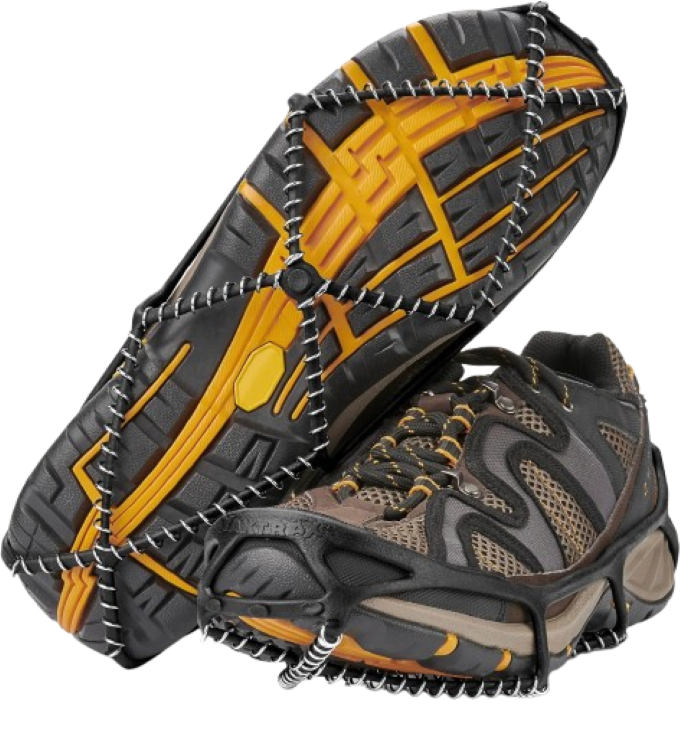
Yaktrax Walk Traction Device
Best Budget Buy
CleverHiker Rating:
4.2/5.0
Price:
$30
Weight:
3.2 oz.
Type:
Coils
Best Use:
Casual, packed snow
Pros
- Affordable
- Widely available
- Lightweight
Cons
- Light traction
- Durability

Traction
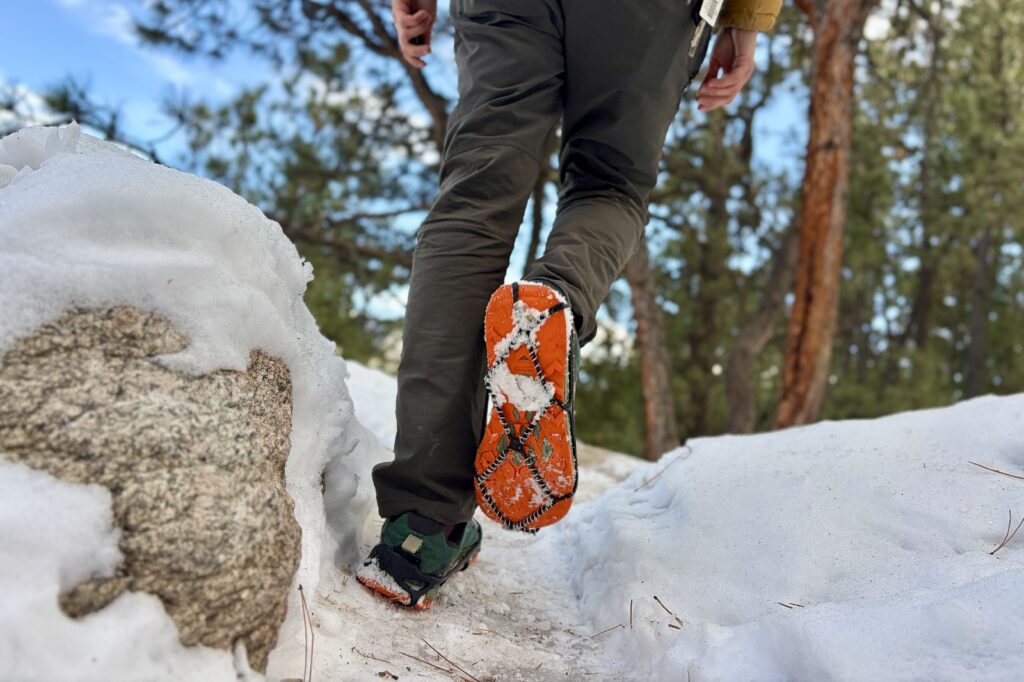
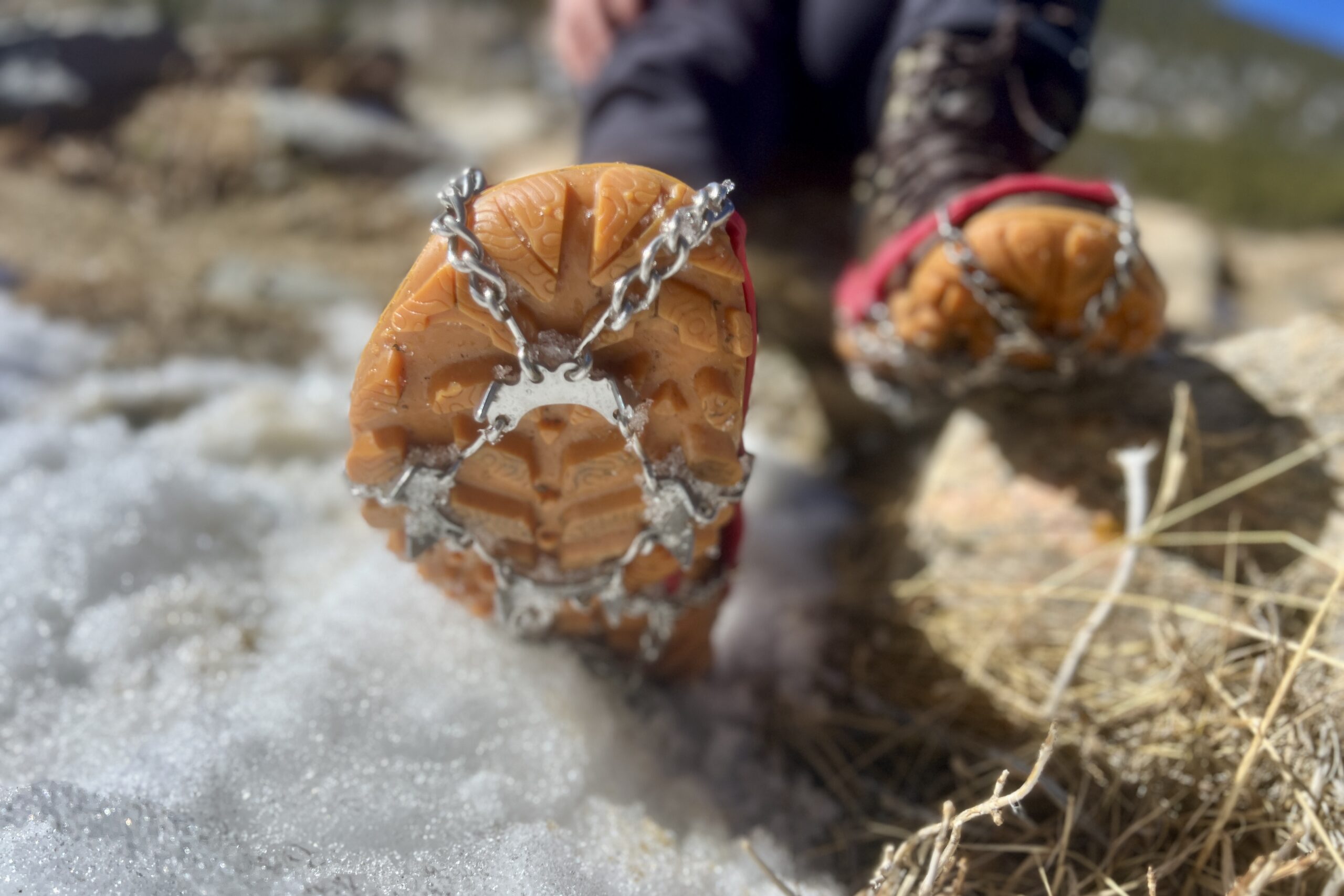
The Yaktrax Walk offers moderately aggressive traction with its 1.2 mm steel coils – a design that’s different from the studs and cleats found on most winter traction devices. This coil system provides a close-to-ground feel, which is great for transitioning between wet and dry surfaces. But it also sacrifices a bit of bite on steeper or more technical terrain.
On most surfaces you’ll encounter around town – ice, packed snow, and light, loose snow – the Walk performs better than you’d expect. The coils give an extra edge of stability and just enough confidence as long as the path stays relatively flat.
Once the grade increases, though, the limits of this design start to show. They can limit the amount of skating but have nothing to bite into ice. They’re not as safe as spike-based systems on icy or steep terrain.
Overall, the Yaktrax Walk is ideal for everyday winter use like walking the dog, commuting to work, or navigating icy sidewalks and parking lots. For true winter hiking or uneven trails, you’ll want to step up to a more aggressive cleat with real spikes.
Fit
The Yaktrax Walk fits a wide range of footwear reasonably well, but it’s definitely a “one size fits most” kind of item. The elastic harness isn’t as secure or form-fitting as what you’ll find on higher-end cleats, but it’s still comfortable enough for everyday use. For casual walkers wearing standard shoes or light boots, the overall fit will feel adequate but not locked in.
Our biggest concern with the Walk is with security. The rubber harness has a tendency to shift, especially in uneven terrain, and it can even pop off if it catches the wrong angle. The gap along the arch – as well as the steel coils themselves – are prone to snagging on rocks and sticks, creating a potential tripping hazard on rugged trails. The Yaktrax Walk requires a little more careful fitting and adjustment overall than other ice cleats.
Ease of Use/Versatility
The Yaktrax Walk features a very simple design, but sometimes they take a little eyeballing to get them aligned correctly. They have a tendency to flip inside out when packed, and while the toe and heel are faintly marked, it’s not immediately obvious which end is which. This is annoying when using them in the dark.
The toe basket sits right at the very tip of the shoe rather than wrapping over the top, which makes the Walk a little harder to slip into. Even once they’re on, they usually need a final wiggle and adjustment to lock in fully before you start walking.
In use, the Walk performs better for casual winter walking. Packed snow is where they excel, offering reliable, confidence-boosting grip on moderate paths and trails. On steeper icy sections, traction becomes dicey, and in loose snow, the coils can collect buildup that reduces their bite.
Weight/Packability
The best part of the Yaktrax Walk is how impressively lightweight and affordable they are. At just 3.9 ounces for the pair, they’re the lightest winter traction devices on our list, making them an easy choice for anyone who wants added traction without adding noticeable weight. They keep weight to a minimum – in your pack and on your feet – which is a nice perk for all-day wear.
However, they could be a little more packable. For such a minimalist design, the Walks are surprisingly bulky and have a habit of flipping inside out or tangling with other gear. Since they don’t come with a stuff sack, it’s easy for them to snag or get lost in your pack. We recommend tossing them in a small sack of your own or strapping them to the outside of your bag when not in use.
Durability
Durability is undeniably the Walk’s weakest point. We’ve gone through several pairs of these ice cleats traversing icy parking lots in the winter, snapping coils and elastic harnesses. Once a coil or strap fails, these Yaktrax are unusable.
The upside is that the Yaktrax Walk is both inexpensive and widely available, making replacements quick and painless. Although we prefer gear that lasts – and stays out of the landfill – the Walks are easy to replace on short notice with minimal blow to the wallet.
Should You Buy the Yaktrax Walk?
The Yaktrax Walk is best suited for people who need a simple, lightweight boost in traction for everyday winter outings. Think walking the dog, commuting on icy sidewalks, or navigating packed-snow paths around town. They prioritize minimal weight, easy transitions between surfaces, and a simple, no-frills design. If you mostly stick to flat or gently rolling terrain and want something that adds confidence without feeling heavy or overbuilt, the Walk serves that purpose well.
However, it’s not the right choice for hikers, runners, or anyone venturing onto steep, uneven, or icy trails. The coil-based traction and basic harness aren’t secure or aggressive enough for steep or rocky terrain, and the durability simply isn’t up to frequent or high-demand use.
In terms of value, the Walk offers good bang for the buck for casual winter travel. It’s inexpensive, widely available, and feather-light, making it easy to justify as a convenience item. But those who need long-term durability or reliable grip in variable terrain will get far better value from a more robust, spike-based cleat.
What Other Traction Devices Should You Consider?
Be sure to check out our full winter traction guide to find the perfect pair of ice cleats for your needs.
Kahtoola NANOspikes Review: We like the NANOspikes better for running as they are lightweight, have strategically placed concave studs, and a grippier plastic sole. The concave stud shape provides better grip at every angle – although, they aren’t replaceable.
Black Diamond Distance Spike Review: The Distance Spike will keep you in the realm of ultralight gear while providing much more serious traction and a superior fit. It’s a substantial upgrade in performance and durability over the Yaktrax Walk, but that jump in quality comes with a significantly higher price tag.
Yaktrax Diamond Grip Review: The Diamond Grips are also comfy under foot, but are best suited for sticky snow that tends to accumulate on your shoe or cleats. The beaded design allows the spikes to spin freely, constantly shedding excess snow. If your main concerns are durability and security, the Ice Runners are still your best bet.
The post Yaktrax Walk Winter Traction Device Review appeared first on CleverHiker.