
 OffroadAdmin
Bottom Line
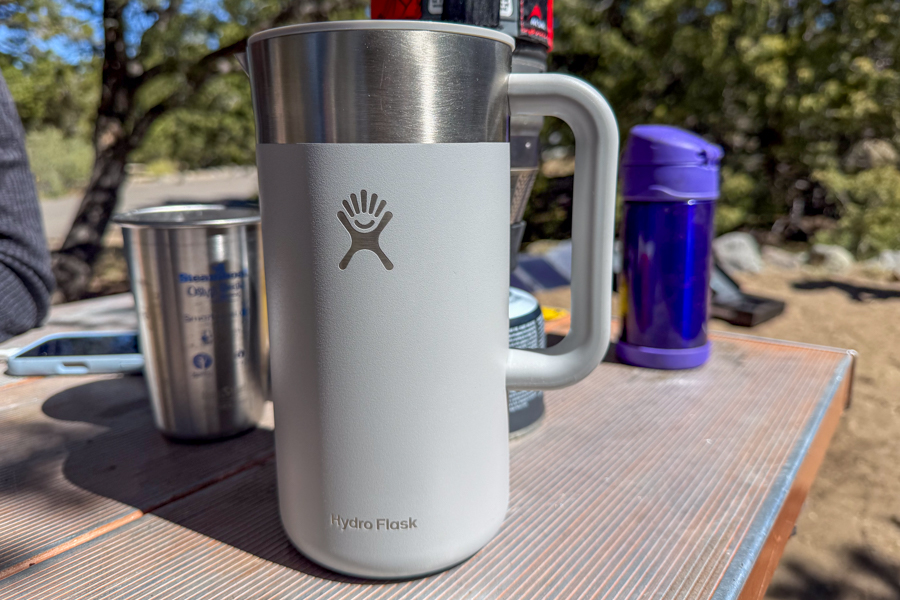
Built around Hydro Flask’s signature stainless steel quality, the Insulated French Press keeps your brew at drinking temperature far longer than a standard press. The 18/8 pro-grade body transfers zero metallic flavor to the coffee. We tested it over several weeks at frontcountry campgrounds and at home, and the brew quality was consistently excellent.
The lid is where we have reservations. It lacks a proper seal, which means pressing too aggressively sends hot coffee and grounds out through the top. This happened to us twice. It’s manageable if you press slowly and deliberately, but it’s a design quirk you should know going in.
Value is a little trickier. This is not a cheap French press, and the fussy lid makes the price harder to justify. If it sounds like a dealbreaker for you, there are plenty of cheaper options in our gear guide to the best camp coffee makers. But if your top priorities are brew quality, insulation, and a camp-friendly build that’s made to last, there is certainly a lot to like.
How We Tested
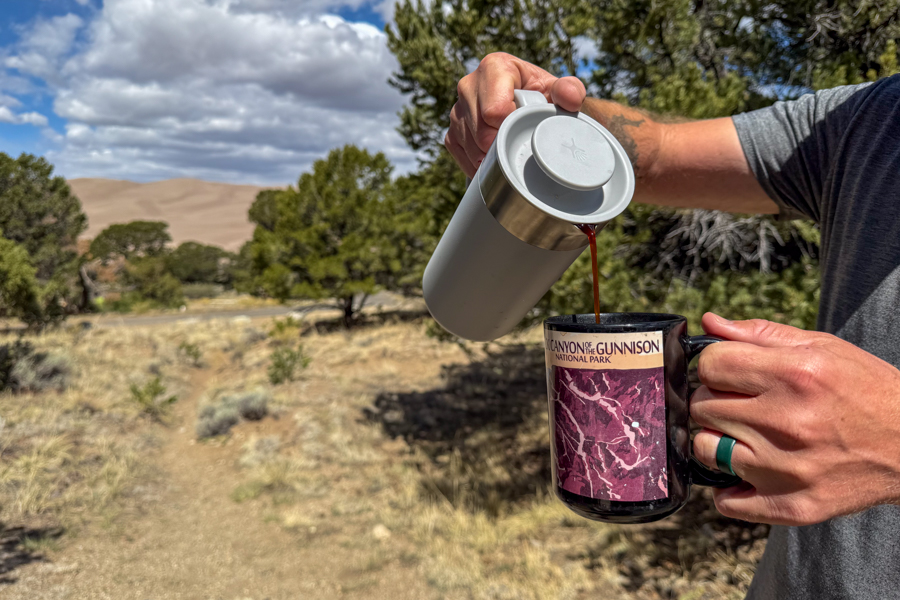
We brewed a lot of coffee with the Hydro Flask Insulated French Press over several months, using it at home, on a group trip to Great Sand Dunes National Park, and at a music festival in Colorado. We paid close attention to heat retention at different temperatures, compared sediment in the cup against the other French presses in our lineup, and kept a close eye on how the lid and plunger behaved with repeated brewing.
Quick Specs
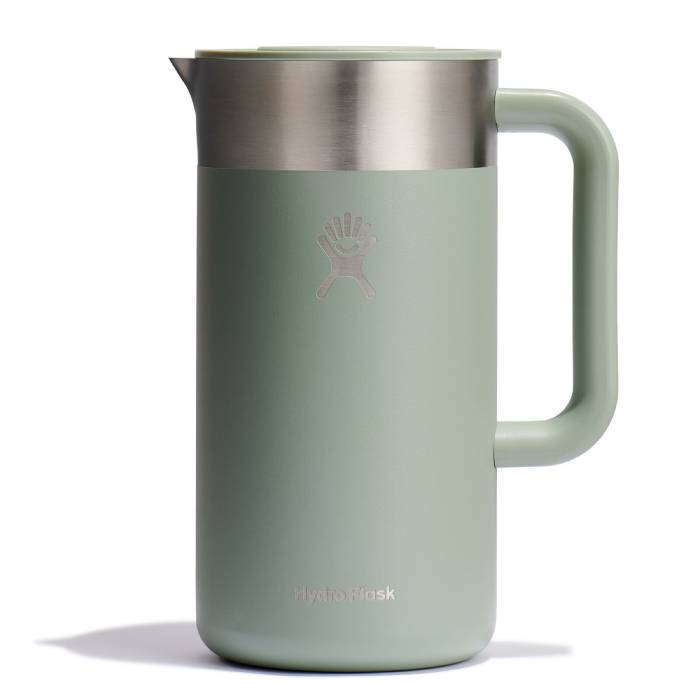
Hydro Flask Insulated French Press
Best for Keeping Coffee Hot
CleverHiker Rating:
4.4/5.0
Price:
$70
Liquid Capacity:
32 fl. oz.
Weight:
1 lb. 7.7 oz.
Size:
8.2 x 5.5 x 4 in.
Pros
- Insulated
- Durable
- Ergonomic
- Dishwasher-safe
- Familiar design
Cons
- Poorly designed lid
- Susceptible to leaks
- Small pour spout
Portability
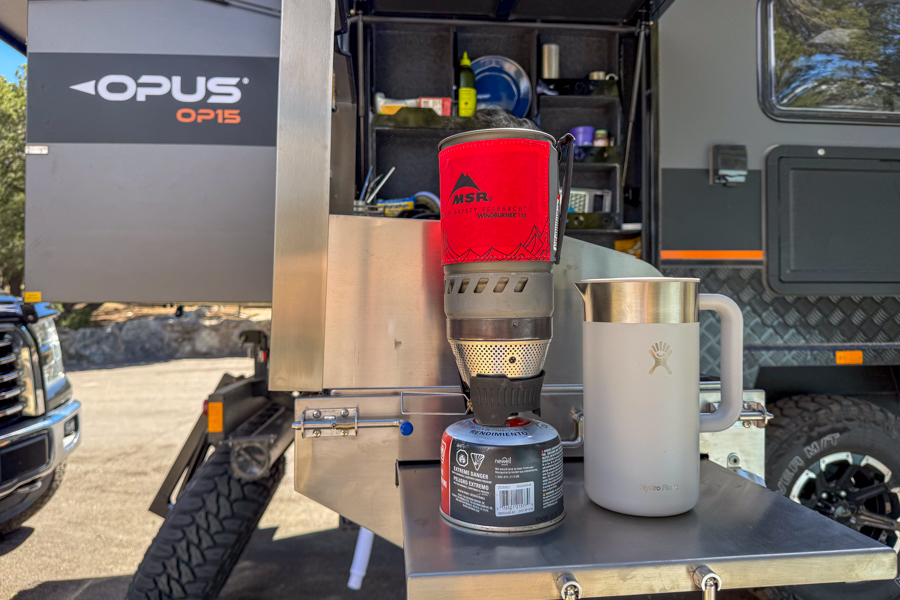
At 1 pounds, 8 ounces, the Hydro Flask Insulated French Press is heavier than the pour-over options and lightweight presses in our lineup, which is expected for an insulated stainless steel vessel of this size. For frontcountry camping and car camping, the weight is a non-issue. For backpacking, it is more than most weight-conscious campers will want to carry.
The cylindrical shape packs efficiently into a camp kitchen box or vehicle gear bin, and the ergonomic handle makes it easy to carry and pour. It does not pack as flat or light as many pour-overs, but for a French press that doubles as a serving carafe and keeps coffee warm for hours, the trade-off is reasonable for the car camping audience it is designed for.
Ease of Use
The brewing process itself is familiar and straightforward: Add grounds, pour hot water, steep for four minutes, press, and pour. There is no assembly, no special technique, and no parts to keep track of beyond the plunger. Anyone who has used a French press before will be up and running immediately.
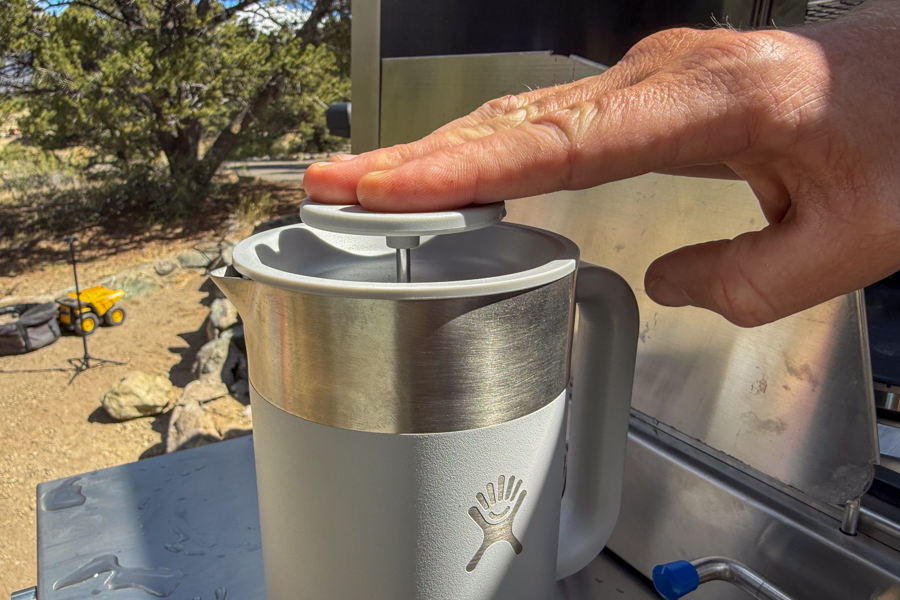
The lid is where ease of use breaks down a bit. The plastic, press-in lid lacks a proper seal, which means pressing the plunger requires a deliberate, controlled pace. Press too aggressively, and hot coffee and grounds eject through the lid gap. This happened to us twice during testing and is consistently flagged in user reviews. The pour spout is also on the narrow side, resulting in a slower flow rate than is ideal for that first cup of coffee in the morning.
Time to Brew
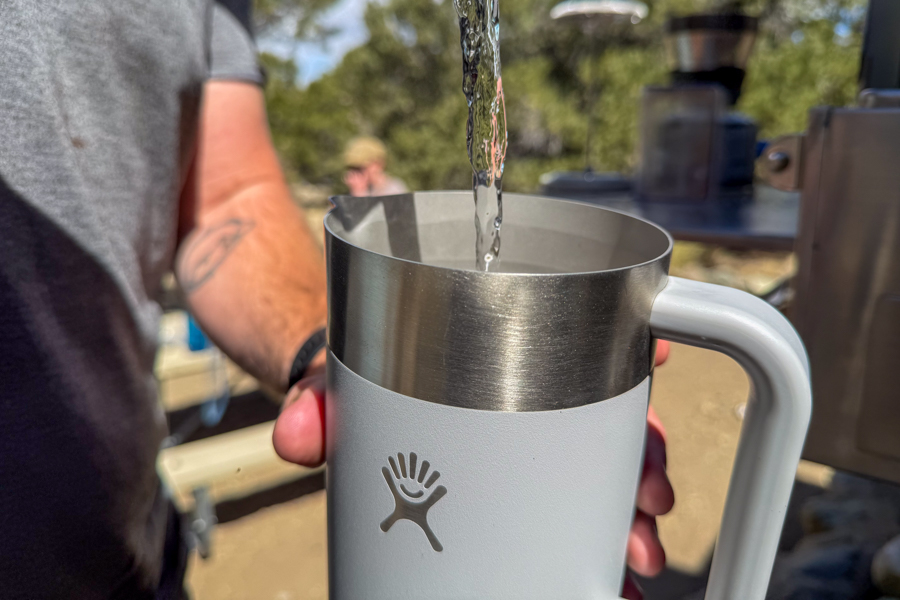
One of the things we love about a French press at camp is how little attention it takes. Add your grounds, pour in hot water, set a four-minute timer, and move on with your morning. By the time you’ve pulled on your boots, wandered around camp a little, or started dealing with breakfast, your coffee is ready. It is a very straightforward steep-and-press setup with no extra steps. On slow camp mornings, the Hydro Flask’s simplicity is hard to beat.
Ease of Cleanup
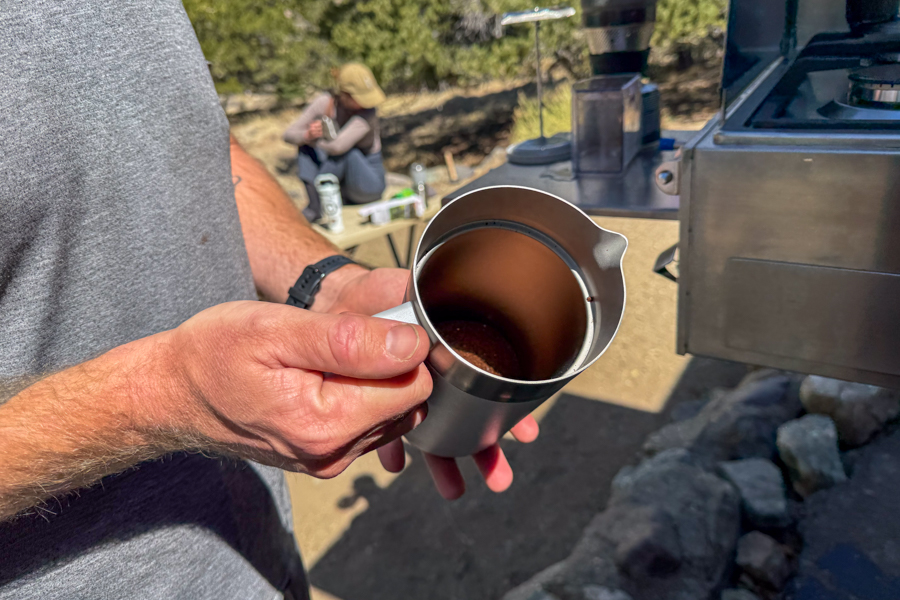
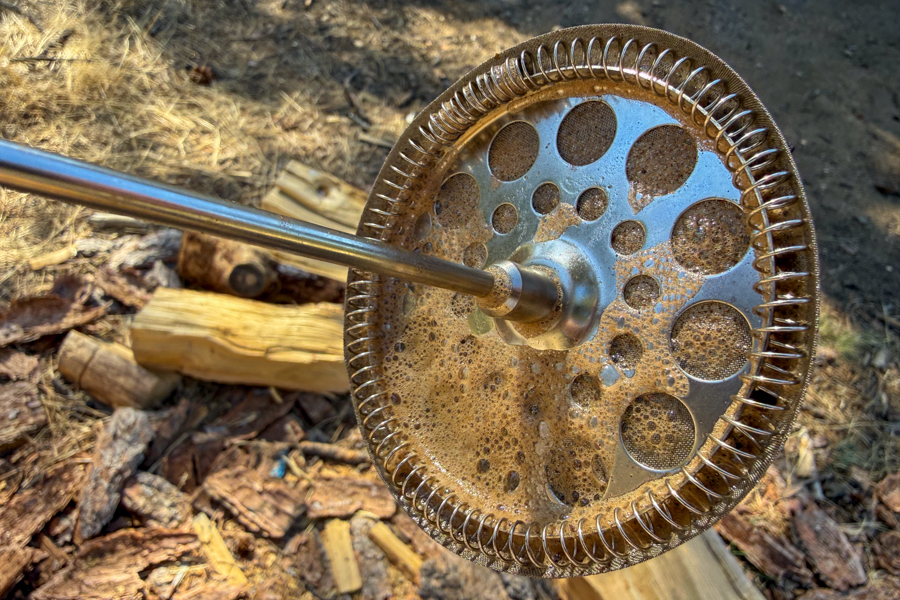
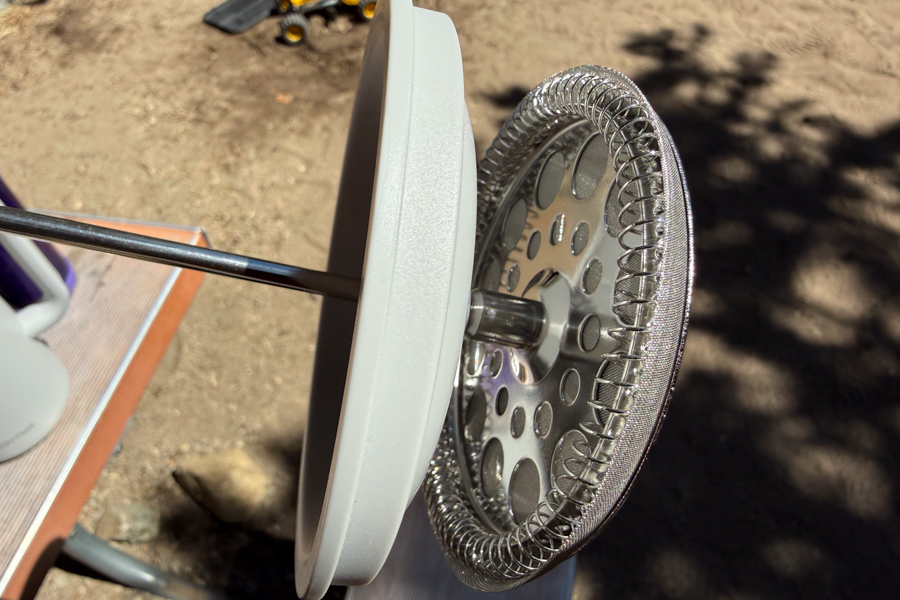
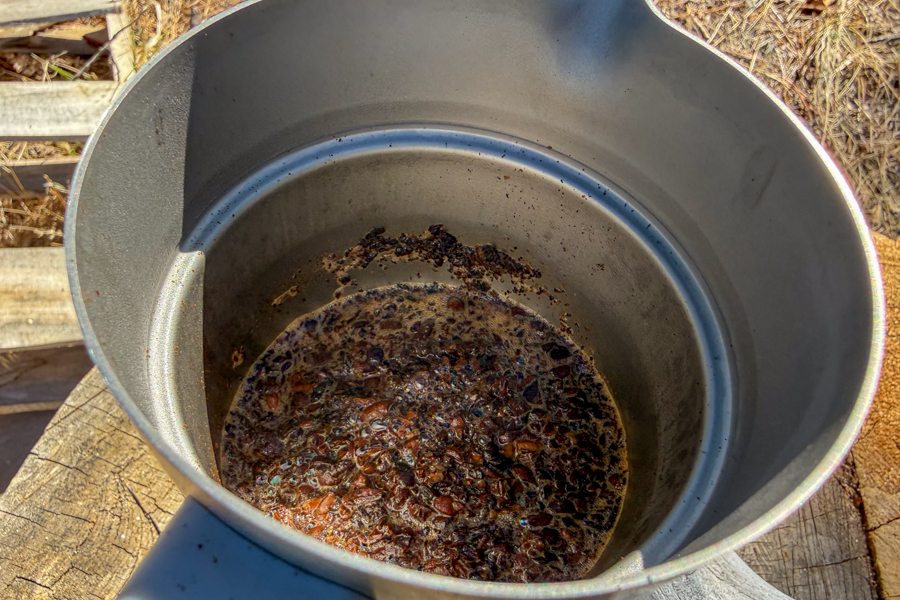
French presses are simply not the easiest coffee makers to clean at camp, and the Hydro Flask is no exception. The filter catches grounds, the plunger has a few places where everything likes to hang on, and it takes a decent rinse to get it all clear. In our testing, cleanup usually took somewhere around 30 to 45 seconds under running water, which is pretty normal for this style of brewer.
The good news is that the wide-mouth design helps a lot. It is easy to get a hand or sponge inside, which makes this one less annoying to clean than some of the narrower options we tested. We also like that the stainless interior does not seem to hold onto smells or old coffee flavor, so a solid rinse is usually enough for everyday camp use. If it starts getting grimy, the plunger comes apart for a more thorough clean.
Coffee Strength & Quality
This French Press makes a really solid cup of coffee. In our testing, it brewed coffee that tasted just as good as the better French presses in our lineup. Side by side, we thought it made a noticeably richer, cleaner cup than plastic-bodied alternatives. Stainless steel brewers can sometimes bring a weird metallic edge to the flavor, but this one didn’t. The stainless body stayed neutral, and the coffee tasted full and clean.
Like any French press, you are still going to get a little sediment in the cup. We did not find it noticeably better or worse than the other presses we tested. A coarser grind helps, but even with our grinder set as coarse as it would go, we still had a small amount of sediment. That felt normal, not like a flaw.
One nice thing about this press is that it is easy to dial in the strength you want. You can play with grind size and steep time just like you would with any French press, but the insulated body gives you a little more flexibility since the coffee stays hot longer while it brews. If you like a stronger cup, that is a nice little bonus.
Should You Buy the Hydro Flask Insulated French Press?
If you’re a French press lover and like your coffee to stay hot while camp slowly comes to life, the Hydro Flask Insulated French Press is a pretty appealing option. It makes a really good cup of coffee, the body feels solid and well made, and the insulation solves a real problem with regular French presses: Your coffee starts cooling off the second you make it.
The catch is the fussy lid. You can work around it once you know its quirks, but first thing in the morning, having to press slowly and pour carefully is not exactly the kind of energy most people are bringing to camp coffee. At this price, it feels fair to expect that part of the design to be better.
Lid quirks aside, the Insulated French Press isn’t for backpackers counting ounces, campers who want a completely brainless press-and-pour experience, or anyone who values ease of use more than insulation.
What Other Camp Coffee Makers Should You Consider?
If the Insulated French Press isn’t quite what you’re looking for, check out our camp coffee makers gear guide for around a dozen alternatives. The three options below are particularly strong competitors to the Hydro Flask.
ESPRO P0 Ultralight Travel French Press Review: The ESPRO P0 is the closest single-serve alternative for French press fans. It brews directly in an insulated travel bottle using a double-filter basket that effectively stops sediment, and the leakproof lid means no ejection risk. It makes one cup at a time, so it is best for solo campers.
AeroPress Go Review: If you love strong coffee but want more flexibility in brew style and an easier cleanup, the AeroPress Go is a versatile choice. It produces espresso-style, American-style, and cold brew coffee in a compact package and cleans up in seconds.
GSI Outdoors JavaPress Review: The JavaPress is another French press for groups that pours predictably and cleans up without drama. It is not insulated, so you will want to pour promptly after pressing. But for campers who want a no-fuss French press without the lid concerns of the Hydro Flask, it is a reliable option at a significantly lower price point.
The post Hydro Flask Insulated French Press Coffee Maker Review appeared first on CleverHiker.