 OffroadAdmin
If you have ever thought about lifting your Jeep in the past for any reason, whether it be for practical reasons, such as wanting to be able to drive off-road more effectively, drive off-road in the rough country, or more aesthetic-based reasons, there is a lot to think about before engaging in this task. There are various elements that can alter many aspects of your vehicle, ranging from how it drives to the added safety during future repairs.
What are Lift Kits?
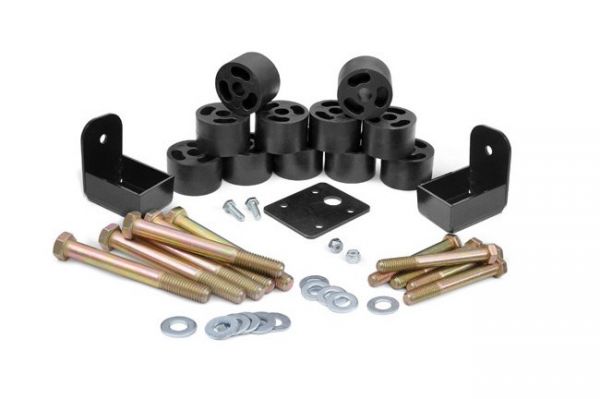
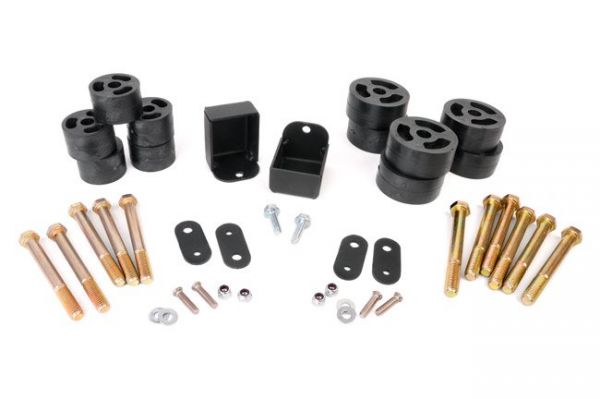
First and foremost, it is important to know what a lift kit is. There are two lift kits, one raises the body from the frame for addition of larger tires, and another for suspension that lifts the whole frame from the ground to create more clearance. The choice of which to choose is entirely up to you and what you intend to do.
Dedicated VS Multi-use Wheelers
Jeeps are generally seen as a vehicle that can handle everyday drives while also being able to function well for off-road and towing purposes. If you intended to dedicate its use to fully off-road pursuits the on-road abilities are less important, allowing for higher lifts and more alteration. If not, it is important to alter the automobile in a way that still works for both purposes.
Jeep Lift Kits Cost
In addition, one of the biggest factors that should be heavily considered before buying a lift kit is your budget. It is important to do your research and identify your budget before beginning this undertaking as it can get quite expensive depending on what you are looking for.
Moreover, if you are able to do some of the work and have access to the required tools without hiring a professional, this can save you valuable money but will take up more of your time.
It is crucial to determine the Jeep’s make, model, and year to ensure that you are obtaining the proper parts for your specific Jeep. Not all models are made the same, and parts that will work for some may not be suited for your own.
Also, ensure that you are able to pay for whatever it is you wish to do in advance, rather than splitting it up into several parts. This is because if not all the parts are there, it can result in damage to your Jeep and increase potential risks.
Quick Look at Tire Sizes
33” tires
On a positive note, it is possible to change to 33” tires with little or no modifications or alterations to your vehicle whatsoever, assuming that you intend to drive mostly on the main roads.
If you hope to embark on some off-road adventures, some modifications may need to be made for the tire clearance. A Budget Boost Lift will likely provide you with the clearance that you require. It is a lift kit that often includes front and rear spring and shock spacers, and a front sway bar extension and longer brake lines for the front and back of the Jeep.
While not a lot, these lift kits will provide roughly an inch and a half of clearance to work with bigger tires, and are a good place to begin the process.
35” tires
With 35” tires, you will have reached the point where it is no longer a choice of whether or not to use a lift. This is because you will require a minimum of two and a half inches in order to achieve adequate clearance. With this in mind, it is a prime time to speak about the net lift versus what the lift kit contends you will receive.
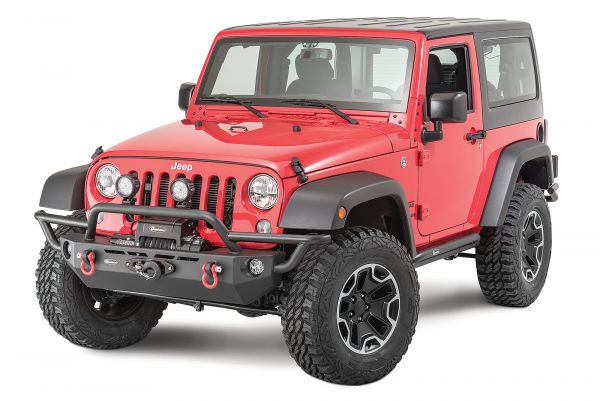
The majority of Jeep lift kits work under the assumption that you have a fully loaded Jeep when measuring the height you receive. This assumes that your vehicle already has both front and back bumpers, as well as a steel skid plate. If this is not the case, then this means your lift will be higher than estimated.
This is relevant because it means that you may need longer sway bar lines or brake lines than what you will be given in the kit in order to achieve the life you desire. Ideally, an optimal kit will provide new shocks and springs, as well as brake lines/extensions, top or bottom front control arms and track bars for the front and back.
37” tires
As expected, these lift kits will require a higher lift of at least three and a half inches but will have the same items as the previous two and a half inch kits (minus the control arms for the front and back).
These kits are ideal for off-roading because they offer up to two inches more of lift than the factory edition. In addition, they are relatively inexpensive and seldom cause any damages or require much maintenance. For this, you would be looking at a simple body lift or a Budget Boost Lift.
Body lift is quite inexpensive but the amount you can lift the frame without damage is more limited if you do not do more modifications. At roughly two or three inches, issues may occur and it may be wise to invest in a suspension lift instead.
If you are not interested in Budget Boost lifts, you can opt for long or short arm lifts once you reach the two to four-inch range. Either choice can alter the geometry of the vehicle, especially if you surpass the four-inch mark to around six inches (in which case it is advised you use your Jeep mainly for off-road endeavours).
They are still able to drive on the road, but will be noticeably less comfortable and less safe due to the increased center of gravity. Due to this, this automobile would not be the ideal choice for daily drives on main roads.
Conclusion
This said, while height comes with some issues and challenges, there is no real answer as to how high you should ultimately go. The answer is often subjective and will depend on the demand you expect to put on your Jeep as well as the budget you have allotted yourself.
Choosing The Right Jeep Lift Kits FAQ
Not exactly, it depends on how you use your Jeep. For daily driving with occasional trails, 33” tires are often the sweet spot. If you want more trail capability without going full rock crawler, 35” tires offer a great balance. 37” tires are best for dedicated off-road builds where performance matters more than comfort.
Yes, in many cases you can, especially if your Jeep stays mostly on pavement. However, if you plan to hit trails, adding a small Budget Boost or spacer lift can help prevent rubbing and improve clearance.
For 35” tires, a lift becomes more of a requirement than an option. Most setups need at least 2.5 inches of suspension lift to maintain proper clearance and drivability. At this size, suspension geometry and supporting upgrades start to matter much more.
They can be, but they’re best suited for trail-focused or weekend rigs. Larger tires raise the center of gravity, affect handling, and can reduce ride comfort. If your Jeep is mainly a commuter, 37s might feel like overkill.
A body lift raises the body from the frame and is typically cheaper, but offers limited clearance gains. A suspension lift raises the entire vehicle, improves ground clearance, wheel travel, and overall off-road capability. If performance matters, suspension lifts are usually the better investment.
Last modified: January 30, 2026