
 OffroadAdmin
Bottom Line
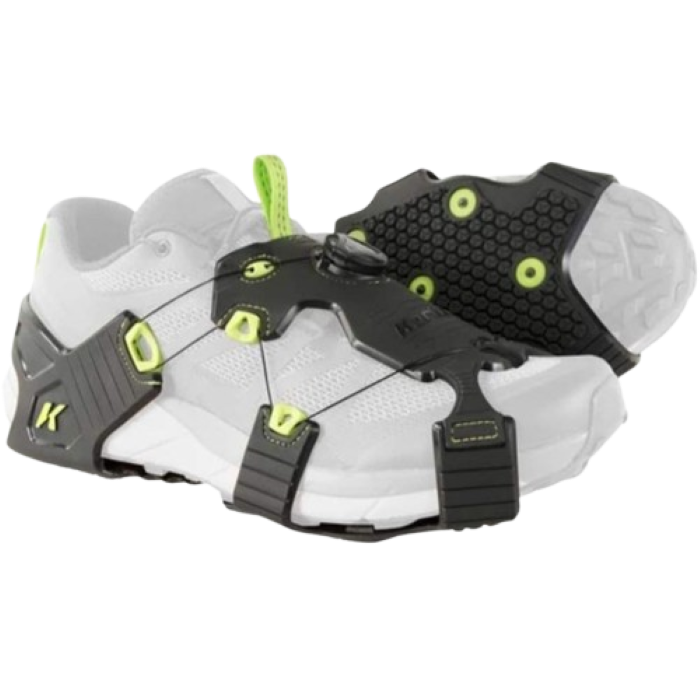
The Korkers Ice Runner provides a secure, reliable fit, excellent durability, and smooth transitions across a variety of winter surfaces. We tested these cleats across every type of terrain we could find in the Colorado Rockies, and their BOA tightening system and wraparound harness held fast every time. The replaceable carbide studs and strong steel cables add durability and longevity, making these cleats a solid long-term investment.
The main limitations are traction and bulk. The forward toe spike sits further back than ideal, and the absence of studs under the arch creates weak points on slick surfaces, so they aren’t ideal for running, steep hills, or deep snow. They’re also heavier and bulkier than most cleats. They’re best suited for putting on at the start of the day and leaving them on until you’re done hiking.
They’re not the cheapest cleats, but their replaceable parts and super secure fit make them a strong value. For a broader view of top-performing options, check out our guide to the best ice cleats.
How We Tested
We covered dozens of trail miles in the Rocky Mountains with the Ice Runners, testing every type of terrain we could find. We took them through deep snow, packed snow, ice, and variable surfaces to assess every aspect of their design. In addition, each piece of gear gets an up close look in a controlled setting to verify quantifiable testing metrics.
Quick Specs
Korkers Ice Runner
Most Secure Fit
CleverHiker Rating:
4.5/5.0
Price:
$70
Weight:
11 oz.
Type:
Studs
Best Use:
Casual, packed snow, ice
Pros
- Super-secure fit
- BOA System
- Durable
- Replaceable studs
Cons
- Traction
- Heavy and bulky
Traction
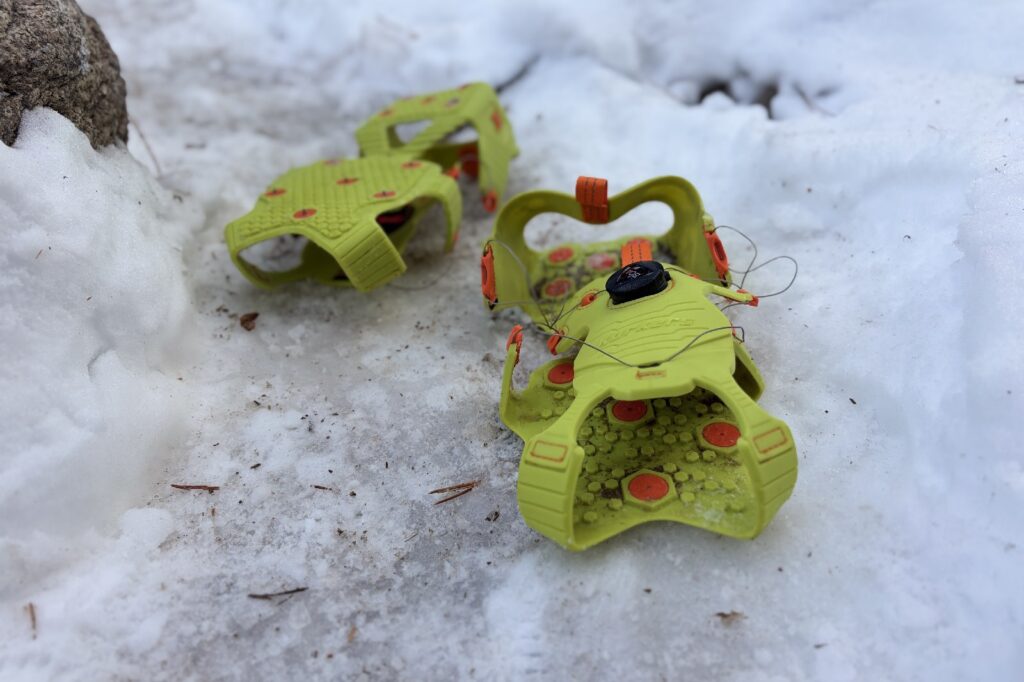
The Korkers Ice Runner features 11 carbide studs across the forefoot and heel, offering light traction on ice, packed snow, and other winter surfaces. For everyday activity or casual walks on packed snow, these cleats perform adequately, providing enough grip to give you an extra edge on slippery ground.
The studs do bite into ice when they make good contact, but they tend to miss from time to time. The forwardmost toe spike sits further back toward the ball of the foot than we’d like, and there’s only one. Consequently, we felt a noticeable and consistent slip when pushing off the toe. The absence of studs beneath the arch creates another weak point, and when the studs miss, you’re left with a slippery plastic between your soles and the slippery surface.
Despite these limitations, the Ice Runner transitions well between surfaces, moving smoothly from snow to wet pavement without catching or dragging. Although marketed as a running ice cleat, the combination of slippery plastic and sparse stud placement makes traction somewhat unpredictable, and we wouldn’t recommend running in them.
Fit
Thanks to its BOA tightening mechanism, the Ice Runner provides a secure and reliable fit across a wide range of footwear. We tried them on trail runners, hiking shoes, and mid-weight hiking boots and the Ice Runner never felt out of place.
These are some of the most secure ice cleats we’ve tested. Once you slide these babies on and get the BOA cinched down tight, they stay put all day long. The BOA cables resist loosening over time and the wraparound harness makes ample contact with your shoe.
Our only complaint is that the fit isn’t tailored to any one shoe type. The harness is generously roomy, which is great for accommodating bulkier boots, but smaller shoes can leave a gap, especially around the toe. The forward toe section can shift or wrinkle if your shoe doesn’t fully fill the harness, which may feel a little awkward. Despite this, the Ice Runner remains impressively secure.
Ease of Use/Versatility
The Ice Runners are straightforward to use and transition effortlessly across varied terrain. The front is unmistakable from the back and the harness opens up super wide for an effortless entry.
In addition to its precise fit and excellent security, the BOA system is very simple to use. Once your foot is in, just push down the BOA wheel and turn it clockwise until it feels nice. Releasing is as simple as pulling the wheel out until you hear a satisfying click. The handy pull tabs on the upper and the heel aren’t too shabby either.
As long as you stay away from the steeps, the Ice Runners can handle most surfaces with ease. We were delighted by how shoe-like they felt on dry surfaces. They don’t mess with your gait or feel like platform shoes. However, proceed with caution with navigating icy hills or venturing into deep snow.
Weight/Packability
The Korkers Ice Runner isn’t exactly an ultralight’s dream. It’s a bit heavier and bulkier than most other ice cleats, which is surprising considering its light traction.
The pair weighs in at 14.8 ounces – nearly a half pound for each foot. That’s a significant weight to consider, especially if you’re planning on running in them or tackling big miles.
The tradeoff for the Ice Runner’s exceptionally secure fit and versatility is bulk. The wraparound harness and BOA cables take up a fair amount of space in your pack, and the cables themselves create an obvious tangling hazard. A stuff sack would make packing a little easier, but you’ll have to bring your own since Korkers does not provide one with the cleats.
These cleats are really meant to be put on at the beginning of the day and left on until you make it to camp or the car. They’re not the pair to carry with you all day just to break out of your pack when the terrain gets tough.
Durability
The thick plastic harness, 49-strand steel BOA cables, and carbide studs make the Ice Runners some of the most durable ice cleats that we’ve tested.
The cables theoretically have the tensile strength to hold several adult humans before breaking. The carbide studs are also incredibly strong and abrasion resistant but are made to be replaced if they were to break or fall out. That means that the main body of the cleat should be able to outlast multiple sets of replacement cleats.
The only caveat is the BOA cables themselves. If one were to fail, they aren’t easily repairable in the field. Any breakage would likely require sending the cleats back to Korkers for repair or replacement. While this is a minor inconvenience for casual users, it’s worth noting for those relying on the Ice Runner in remote or extended backcountry situations.
Should You Buy the Korkers Ice Runner?
The Korkers Ice Runner is ideal for winter adventurers who prioritize a secure, reliable fit over ultralight weight. These cleats are ideal for day trips, casual hikes, and everyday walks on packed snow or gentle icy paths, where you need just a little edge in stability and confident footing. Thanks to the BOA tightening system and wraparound harness, the Ice Runner stays firmly in place on a variety of shoe types, from trail runners to mid-weight hiking boots, making them one of the most secure cleats we’ve tested.
That said, they’re not the cleats for runners, steep hills, or deep snow unless you’re very confident in your footing. The forward toe spike is positioned further back, and the absence of studs under the arch creates unfortunate weak points, making traction a little unpredictable on tricky terrain.
For those who use them in the right context, the Ice Runner represents excellent value. Their durability, replaceable carbide studs, and secure fit make them a long-lasting option, and their stability and ease of use outweigh the bulk for most people. These are best put on at the start of the day and left on until your outing ends.
What Other Traction Devices Should You Consider?
Be sure to check out our full winter traction guide to find the perfect pair of ice cleats for your needs.
Kahtoola NANOspikes Review: We like the NANOspikes better for running as they are lightweight, have strategically placed concave studs, and a grippier plastic sole. The concave stud shape provides better grip at every angle – although, they aren’t replaceable.
Yaktrax Walk Review: The Walks are slightly more noticeable under foot, but provide slightly better traction on ice over the Ice Runners. Besides that, they serve essentially the same purpose with a smaller price tag but significantly less durability.
Yaktrax Diamond Grip Review: The Diamond Grips are also comfy under foot, but are best suited for sticky snow that tends to accumulate on your shoe or cleats. The beaded design allows the spikes to spin freely, constantly shedding excess snow. If your main concerns are durability and security, the Ice Runners are still your best bet.
The post Korkers Ice Runner Ice Cleats Review appeared first on CleverHiker.